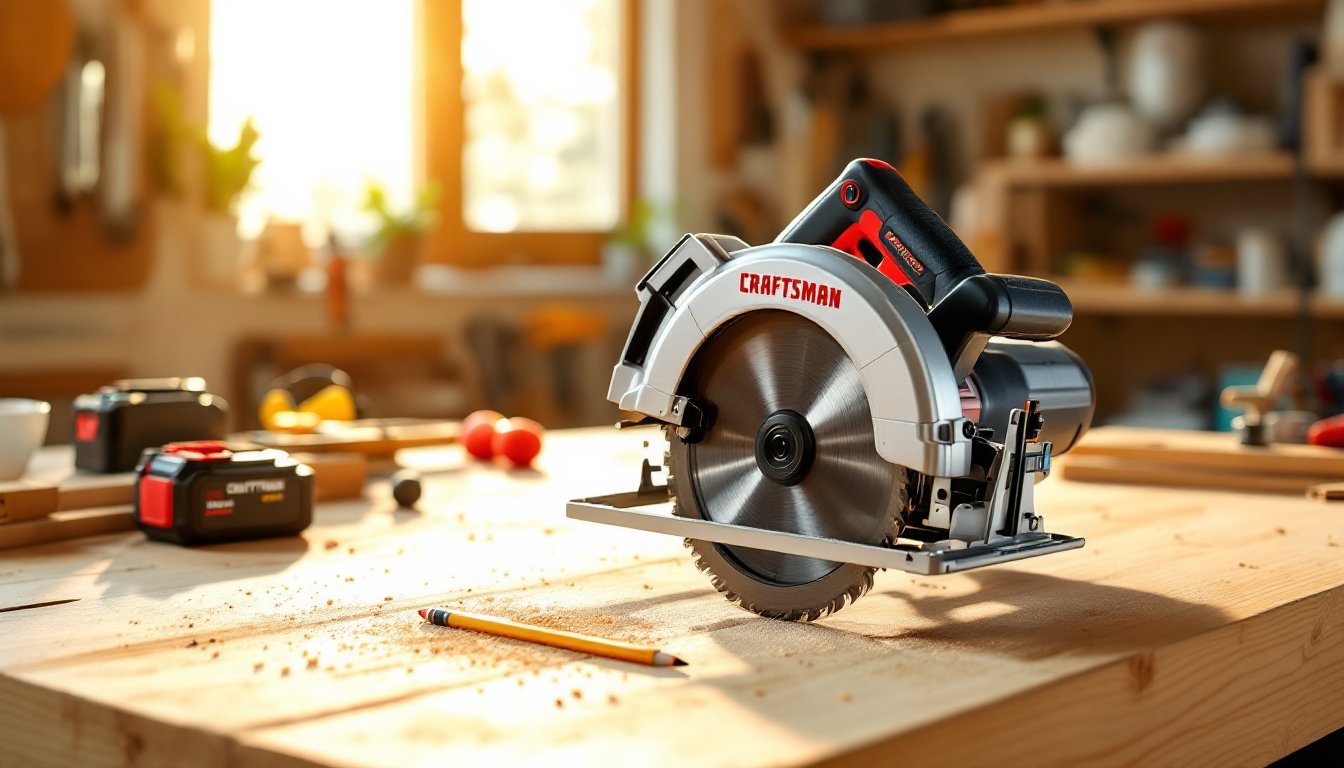
A circular saw sits at the crossroads of accessibility and power in the DIY toolkit. Whether you’re crosscutting 2×4 framing lumber, ripping plywood, or tackling angled miter cuts, a Craftsman circular saw delivers the speed and control most home projects demand. Unlike a table saw, it’s portable enough to bring to the job site, you’re not wrestling a project into a stationary machine. This guide walks you through what to look for, how to set up safely, and the techniques that turn rough cuts into clean results.
Table of Contents
ToggleKey Takeaways
- A Craftsman circular saw balances portability and power, making it ideal for crosscutting, ripping, and angled cuts on DIY projects without the setup requirements of a table saw.
- Choose between a 6½-inch or 7¼-inch blade circular saw for 95% of home projects; cordless models offer convenience while corded models cost less and never need charging.
- Set your blade depth to cut just ¼ inch past the workpiece, align cuts with a marked line using the baseplate notch, and maintain a 3-inch distance from the blade with proper clamping.
- Always wear goggles, hearing protection, and a dust mask; skip gloves while cutting, unplug the saw before blade changes, and never reach under the baseplate while the blade is spinning.
- Keep your saw maintained by cleaning sawdust monthly, replacing dull blades promptly (every 1–3 months depending on use), and storing in a dry place to prevent rust and extend motor life.
What Makes a Craftsman Circular Saw the Right Choice for DIY Projects
Craftsman has built its reputation on tools that balance affordability with reliability, and its circular saws are no exception. A quality circular saw excels at ripping, crosscutting, and beveling in one compact form factor. Unlike a miter saw (which is better for precise crosscuts on trim), a circular saw lets you cut sheet goods, work in tight spaces, and make angled cuts without table setup or clamping hassles.
For most DIYers, a 6½-inch or 7¼-inch blade circular saw handles 95% of home projects, framing, deck building, cabinet making, and furniture construction. Cordless models have improved significantly: modern lithium-ion batteries hold charge well and provide consistent power. If you’re making cuts sporadically around the house, cordless wins on convenience. Corded models cost less and never need charging, making them better for extended work sessions or if you’re on a tight budget.
Craftsman models typically target the mid-market: they’re not the cheapest disposable saws, and they’re not professional-grade powerhouses. That sweet spot means you get durable construction, adequate power for standard cuts, and parts availability without premium pricing. For renovations, deck builds, or the first saw in a growing tool collection, this positioning makes practical sense.
Key Features and Specifications to Compare When Shopping
Before buying, look at a few non-negotiables. Blade size determines maximum cutting depth: a 7¼-inch saw cuts about 2.5 inches deep at 90 degrees and roughly 1.75 inches at 45 degrees. That’s enough for framing lumber (1.5-inch actual thickness) and single-pass plywood, but not hardwood beams. Motor amperage (corded) or voltage/amp-hour (cordless) tells you power available: 5+ amps or 18V minimum are standard for DIY work.
Weight matters more than specs look like, a 7-8 pound saw feels lighter than a 10+ pound model, especially when held overhead or used repeatedly. Blade arbor size is almost always 5/8-inch: make sure any replacement blades you plan to buy match your saw. Check whether the saw has an electric brake (stops the blade quickly when you release the trigger) and a dust blower (directs sawdust away from your cut line so you can see clearly).
Motor Power and Blade Size Considerations
Corded saws draw constant power from a wall outlet. They’re lighter, cheaper, and never run out of charge, ideal if you’re working in your garage with access to outlets. Cordless saws need batteries and chargers, adding to upfront cost, but eliminate extension-cord management and let you move freely around a job site. A 5-amp or higher corded motor or an 18V to 20V lithium-ion cordless system delivers reliable power for ripping hardwood or making angled cuts through pressure-treated lumber.
Blade size directly affects what you can cut. A 6½-inch blade (sometimes called a circular saw’s “mini” version) is lighter and better for precise cuts on smaller stock: a 7¼-inch blade (standard) is the workhorse that handles most tasks. Don’t obsess over premium blade brands right away: a basic carbide-tipped combination blade costs $15–30 and cuts cleanly across wood grain (crosscut) and along it (rip). You’ll upgrade as your needs sharpen.
Getting Started: Setup and Safety Essentials
Out of the box, a new circular saw needs minimal prep. Check that the blade is sharp, the baseplate sits flush against your work surface, and the depth adjustment spins freely. If the saw is corded, inspect the power cord for cracks. Cordless? Charge the battery fully before the first use and verify the battery seats flush in the saw.
Second, set your blade depth correctly. Lower the blade so it cuts just under your workpiece, roughly ¼ inch past the bottom. A blade that protrudes too far kickbacks harder and wastes energy: one that’s too shallow binds and burns the wood. Practice this adjustment before your first cut: most saws use a quick-release lever on the baseplate.
Mark your cut line clearly with a pencil. Avoid marking with a pen or marker: ink can smear and throw off accuracy. A speed square or combination square helps you draw straight crosscut lines: a straightedge or chalk line works for rips. Stand at an angle so you can see both the blade and your line as you cut, standing directly behind the blade puts your face in line with potential kickback.
Proper Handling and Protective Gear
Goggles or a face shield are non-negotiable. Sawdust and wood chips fly at speed: your eyes must be protected. Hearing protection (earplugs or earmuffs) is essential if you’re cutting for more than a few minutes, a circular saw typically runs around 90 dB, loud enough to cause fatigue and long-term damage. Dust mask or respirator matters, especially when cutting pressure-treated lumber, plywood (which releases formaldehyde), or dense hardwoods.
Gloves are a common temptation and a common mistake. Loose-fitting gloves can catch the spinning blade: tight gloves reduce tactile feedback when guiding the saw. Skip gloves on the saw itself: wear them when handling rough-cut lumber and setting up. Keep your hands at least 3 inches away from the blade line, use a guide, clamp, or straightedge as a barrier, never your fingers.
Never reach under the baseplate while the blade is spinning or coasting to a stop. Even with an electric brake, the blade takes a second or two to stop. Always unplug corded saws (or remove batteries on cordless models) before changing blades, adjusting depth, or troubleshooting. It takes five seconds and prevents catastrophe.
Common Cutting Techniques for Home Improvement Projects
Crosscutting (cutting across the grain) is the most common task. Clamp or hold your workpiece on a flat surface. Mark your line, align the blade with the line (most saws have a notch in the baseplate as a guide), and push steadily forward. Don’t force the saw: let the motor do the work. Forcing causes binding, burns the wood, and puts strain on the blade.
Ripping (cutting along the grain) requires a straightedge guide. Clamp a wooden straightedge parallel to your cut line, then run the baseplate along it as you cut. A rip-guide attachment (often included or sold separately) slots onto the baseplate and rides the edge of your board, faster than clamping, but less precise on warped lumber. Rips generate more resistance than crosscuts: feed speed should be slower and steadier.
Bevel cuts (angled cuts) are essential for frames, trim, and roofing. Most saws tilt up to 45 degrees. Loosen the bevel-lock lever, rotate the baseplate to your target angle, re-lock, and make your cut just as you would a 90-degree cut. Always test on scrap first, a few degrees off look sloppy on installed trim. Bevel cuts also create more binding: keep feed speed measured and let the blade slow down slightly if it’s struggling.
Plunge cuts (starting a cut in the middle of a board, not at an edge) are trickier but useful for cutouts and removing sections. With the blade NOT spinning, position the saw and lower the blade until the front of the baseplate touches your board. Hold firmly, turn on the motor, and let it ramp to full speed before slowly lowering the blade into the cut. This takes practice, start with scrap or sacrifice material until you’re confident.
Maintenance Tips to Keep Your Saw in Top Condition
A well-maintained saw lasts decades. Clean sawdust monthly if you use your saw regularly. Blow compressed air through the motor vents and around the blade housing: accumulated dust clogs cooling air and shortens motor life. Check the power cord (corded saws) monthly for nicks or exposed copper. A damaged cord is a shock hazard and should be replaced, not taped.
Blade maintenance is simple: keep it clean and replace it when it’s dull. A dull blade requires more feed force, burns wood, and pulls the saw off line. Inspect the blade monthly: if you see burned spots or teeth that are noticeably chipped, swap it out. Replacement carbide blades cost $20–50 and are faster than sharpening. Store your saw in a dry place, humidity causes rust on the baseplate and blade arbor. A light coat of machine oil on the baseplate prevents corrosion between uses.
For cordless models, battery care extends runtime. Store batteries at room temperature, not in extreme heat or cold. Don’t leave them fully charged for months: top them up before storage. If a battery no longer holds a charge after a full refresh cycle, it’s time to replace it, not a cheap repair, but necessary if you plan to keep the saw. Corded models simply need a clean outlet and a functioning power cord.
Articles on woodworking project plans and workshop setups and resources like This Old House’s tool reviews and home renovation tutorials are solid references if you’re expanding your saw collection or planning larger projects. Sites like Popular Mechanics also cover tool maintenance and workshop best practices.
Ready to Cut
A Craftsman circular saw is a practical investment for any DIYer ready to move beyond hand tools. It’s forgiving enough to learn on, powerful enough to handle real projects, and affordable enough to justify keeping in your garage long-term. Start with the right setup, sharp blade, correct depth, solid clamping, and respect the safety basics. After a few projects, the saw becomes an extension of your hand, and you’ll wonder how you ever managed without it.