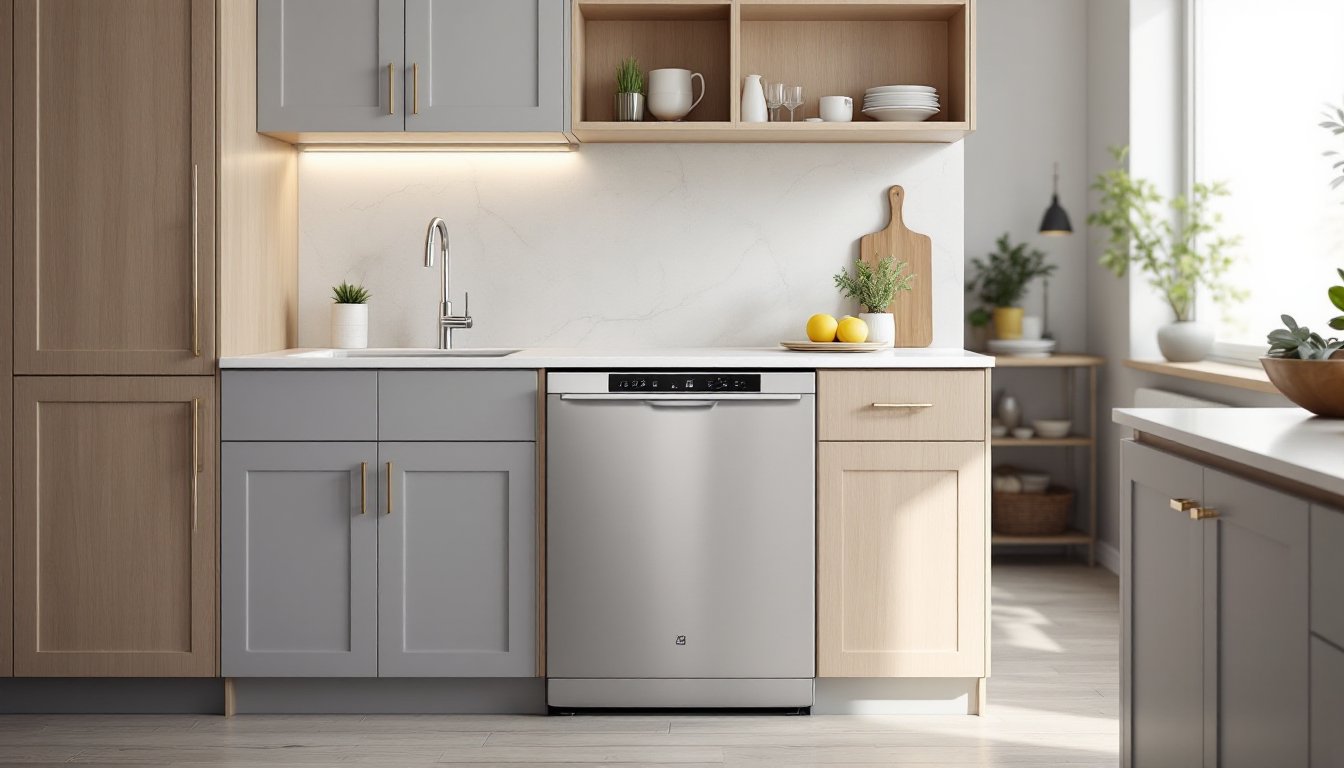
An undercounter dishwasher is a compact appliance that fits neatly below kitchen countertops, offering the convenience of automatic dishwashing without eating up precious cabinet or countertop real estate. For homeowners with smaller kitchens, tight layouts, or those looking for a streamlined aesthetic, an undercounter dishwasher is a game-changer. Unlike portable or countertop models, these built-in units integrate seamlessly into your kitchen cabinetry and plumbing, giving your space a clean, finished look. Whether you’re renovating a tight apartment galley or adding a secondary washing station to a larger kitchen, understanding what makes an undercounter dishwasher work, and how to choose the right one, will help you make an well-informed choice that fits both your space and your budget.
Table of Contents
ToggleKey Takeaways
- An undercounter dishwasher is an 18-inch-wide compact appliance that integrates seamlessly into kitchen cabinetry, making it ideal for small kitchens, apartments, and galley layouts without sacrificing functionality.
- Undercounter dishwasher capacity ranges from 8 to 12 place settings compared to 12 to 16 for standard models, so expect more frequent washing cycles if you have a large household.
- Installation requires licensed professional help for plumbing and electrical work to ensure code compliance, prevent water damage, and avoid warranty issues—a $400 service call is cheaper than a $5,000 damage claim.
- Prices range from $400 to $1,200 retail, but factor in hidden costs like installation labor ($300–$800), cabinet doors ($150–$400), and potential structural reinforcement when budgeting your total project cost.
- Before purchasing, measure your cabinet opening three times and verify electrical/plumbing rough-ins are compatible, while checking for obstructions and ensuring at least 1 inch of side clearance and 4–6 inches of back clearance for proper ventilation.
- Energy-efficient undercounter dishwashers using less than 3 gallons per cycle and under 200 kWh annually can save hundreds over a 10-year lifespan compared to standard models.
What Is An Undercounter Dishwasher and Why Homeowners Love Them
An undercounter dishwasher is a fully integrated appliance that slides under your kitchen counter, typically 18 inches wide and about 34 inches tall (accounting for countertop thickness). Unlike standard full-size dishwashers that are 24 inches wide, undercounter models are narrower, making them ideal for galley kitchens, small apartments, or as a secondary dishwashing station in larger homes.
Why do homeowners choose them? Space efficiency tops the list. If your kitchen layout won’t accommodate a standard 24-inch dishwasher, an undercounter unit solves the puzzle without sacrificing function. Many modern kitchens also benefit from the visual continuity, your cabinet doors extend across the front, creating a cohesive look instead of a boxy appliance breaking up the line.
Another appeal is flexibility. Some homeowners install one as a primary dishwasher in small homes, while others add one as a secondary unit next to a prep sink for entertaining. Energy-conscious buyers appreciate that smaller capacity often means lower water and electricity consumption per cycle, even though you may run it more frequently than a full-size unit.
They’re also worth considering if you’re retrofitting an older kitchen where wall space is at a premium or if you want to preserve an existing layout without major plumbing or cabinetry overhaul. The trade-off is capacity, you’ll wash fewer dishes per load than a standard model, which matters if you have a large household.
Key Features and Specifications to Compare
Before choosing an undercounter dishwasher, focus on the specs that matter for your daily use.
Width and depth are non-negotiable. Standard undercounter models are 18 inches wide (some compact models go down to 17 inches), and you need to verify that your cabinet opening matches these dimensions. Depth typically ranges from 22 to 24 inches, measure from the back of your cabinet opening to the front face of your countertop to ensure clearance for the door to open fully without hitting cabinets or appliances.
Installation type divides into two categories: panel-ready (cabinet door slides on front) and stainless steel or painted front panels (finished frame visible). Panel-ready units cost slightly more but integrate better visually if you want a seamless cabinet appearance. Consider your kitchen’s current style and whether the investment in matching cabinetry makes sense for your timeline.
Water and electrical connections need space behind or beside the unit. Most undercounter models require a dedicated 120-volt outlet, though some need a dedicated 240-volt line, check your model’s specifications. Plumbing hookup needs both an inlet water line (usually ¾-inch) and a drain line (typically 1.5 to 2 inches in diameter).
Capacity, Noise Levels, and Energy Efficiency
Capacity for undercounter models ranges from 8 to 12 place settings, compared to 12 to 16 for full-size units. One place setting is typically one plate, bowl, cup, saucer, and utensil. If you entertain frequently or have a large family, the reduced capacity means more frequent cycles, which some homeowners factor into their decision.
Noise level is measured in decibels (dB). Quieter models operate at 38 to 42 dB (roughly the sound of a quiet library), while louder units run at 48 to 52 dB (similar to normal conversation). If your kitchen opens to a living area or you run the dishwasher during the day, noise matters. Premium models with better insulation and quieter pumps cost more but justify the investment if you value peace and quiet.
Energy efficiency is indicated by the Energy Star certification and the EnerGuide label (in the US and Canada). Look for models that use less than 3 gallons of water per cycle and consume under 200 kWh annually. Over a 10-year lifespan, choosing an efficient model can save hundreds in utility costs. Also check the drying method, condensation drying (passive, no heat) is efficient but slower, while heated drying is faster but uses more electricity. Many budget-conscious buyers tolerate the extra drying time to lower operating costs.
Budget Considerations and Price Ranges
Undercounter dishwashers range from roughly $400 to $1,200 retail, depending on capacity, features, and brand reputation. Entry-level models ($400–$600) handle basic washing, fewer cycles, and louder operation. Mid-range units ($600–$900) add quieter motors, more wash options, and better drying. Premium models ($900–$1,200+) include smart features, ultra-quiet operation, and advanced filtering systems.
Don’t forget hidden costs. If your kitchen doesn’t already have the right electrical outlet or plumbing hookup, installation labor typically runs $300 to $800 depending on complexity. Panel-ready cabinet doors (if not included) add $150 to $400. If you need to move plumbing lines or run new electrical, costs climb significantly, sometimes doubling the project budget. Get quotes from licensed plumbers and electricians before purchasing the unit itself.
Water usage can add up, too. A standard cycle uses 2 to 3 gallons: running it daily adds a noticeable bump to your water bill, though the savings from not hand-washing often offset it. Gas or electric heating for drying also varies by model, factor this into long-term operating cost comparisons.
Consider also that you may need reinforcement of the cabinet floor or structural support if the opening isn’t already prepared. A few homeowners find out mid-installation that their cabinetry wasn’t designed for appliance weight, requiring carpentry work. Budget for surprises by setting aside 15 to 20% extra for contingencies.
Installation Basics: Can You DIY or Should You Hire a Pro
Here’s the honest take: undercounter dishwasher installation involves plumbing and electrical work, both of which require permits in most jurisdictions. Even if you’re handy, the combination makes this a project where hiring a licensed professional is often smarter than DIY.
Why hire a pro? Building codes (part of the National Electrical Code or NEC) govern how appliances connect to water and power. Improper connections can lead to leaks, mold, electrical hazards, or voided warranties. Most municipalities require a building permit for appliance installation, and the inspector verifies that work meets code before you get a certificate of occupancy. If you ever sell your home, unpermitted work can create title issues or require costly remediation.
What can you DIY? If your cabinet opening is already the correct size and the electrical and water rough-ins are in place, you might handle sliding the unit in and tightening connections, but even then, a plumber should verify the hookups. Think of this: a $400 service call is cheap insurance against a $5,000 water damage claim if plumbing fails.
If you’re determined to DIY, work with a licensed professional for the plumbing and electrical portions, then handle the cabinet fitting yourself. You’ll save labor costs while staying code-compliant. Wear safety glasses and gloves when working under cabinets (you’ll encounter sharp edges and debris). Have a shutoff valve installed on the water line so you can stop flow if something goes wrong mid-cycle.
Most manufacturers include detailed installation manuals with their units. Review yours before signing a contractor, it tells you exactly what connections they need to make and what clearances the unit requires.
Space Planning and Kitchen Layout Requirements
Before you buy, measure three times. Start with the cabinet opening itself: width, height from floor to counter bottom, and depth from back wall to counter face. Undercounter models are standardized (typically 18 inches wide, 34 inches tall, 22–24 inches deep), but older cabinets or custom layouts may not match these dimensions exactly.
Check for obstructions behind and beside the opening. Plumbing pipes, electrical outlets, or structural supports can block installation. If your sink is adjacent, verify that the dishwasher door won’t collide with it when fully open, you need at least 2 to 3 inches of clearance. Some kitchens have a cabinet corner or appliance too close, which either requires repositioning (expensive) or choosing a narrower model.
Ventilation and airflow matter, too. Undercounter models need air circulation around the sides and back to prevent heat buildup. Leave at least 1 inch of space on each side and 4 to 6 inches of clearance at the back if possible. Poor ventilation shortens the unit’s lifespan and reduces efficiency.
Consider your countertop material. If you have granite, quartz, or solid surface counters, the weight of the dishwasher pressing up from below is usually fine, these materials are rigid. If you have a thinner countertop or one that’s unsupported over a large opening, you may need to reinforce the structure with 2×4 lumber or plywood underneath, which adds labor and cost.
Finally, think about daily workflow. If the dishwasher sits between your sink and refrigerator, that’s convenient. If you’ve crammed it into a corner where loading and unloading feels awkward, you’ll resent it. Walk through your kitchen workflow during meal prep and cleanup, the appliance should feel like it serves your routine, not fights against it. Many homeowners find that kitchen design software or Houzz for Pros and Homeowners helps visualize layouts before committing to the purchase and installation.
Conclusion
An undercounter dishwasher is a smart choice for kitchens where space is tight or aesthetics demand a seamless look. The right model balances capacity, noise, energy efficiency, and cost with your specific layout and use. Measure accurately, understand the code and permit requirements upfront, and don’t skimp on professional installation for plumbing and electrical work, it’s where most problems (and regrets) come from. With the right planning, your undercounter dishwasher will deliver years of dependable, space-conscious convenience.