A dark bedroom isn’t automatically a decorating dead end, it’s an opportunity to create a bold, restful retreat that feels intentionally designed rather than dimly lit by accident. Whether you’re working with low natural light, small windows, or you simply prefer the cave-like comfort of darker tones, dark bedrooms can feel incredibly luxurious and intimate when done thoughtfully. The key is balancing deep colors with smart lighting, the right textures, and strategic placement to avoid a cramped or dreary feel. This guide walks you through the practical decisions, from paint selection and fixture placement to furniture arrangement and soft furnishings, that transform a dark room into a personal sanctuary.
Table of Contents
ToggleKey Takeaways
- Dark bedroom ideas succeed when you use deep colors like charcoal, navy, or forest green paired with smart lighting and light-toned accents to avoid a cramped feel.
- Layered lighting—including dimmable overhead fixtures, bedside task lights, and accent LED strips—is essential to prevent dark bedrooms from feeling oppressive.
- Choose furniture with visual lightness like slim-leg beds and glass-topped nightstands, and float key pieces to create breathing room in darker spaces.
- Light-colored textiles including cream duvets, neutral throw pillows, and light-lined curtains with blackout backing provide visual contrast and balance dark walls.
- A large mirror opposite your window or bed focal point reflects available light and creates depth, while one or two substantial mirrors work better than multiple small ones.
- Test your paint color in actual room conditions with samples, prep walls meticulously, and use quality primer and two finish coats for professional results.
Paint Colors That Define Modern Dark Bedrooms
Your wall color sets the entire mood, so choose deliberately. Deep charcoal, navy, forest green, and warm black are workhorses in dark bedrooms, they absorb light and create visual depth without feeling flat. Charcoal works especially well in rooms with north-facing windows because it won’t look greenish or sickly the way some grays can in cool natural light. Navy feels more residential and less hotel-lobby than pure black, making it forgiving for first-timers. Forest green or deep sage add warmth and break away from the expected grayscale.
When you pick your color, test it in the actual room. Buy sample pints and paint 2-foot-square patches on different walls, some in daylight, some at night with your typical lamps on. This isn’t overthinking: paint is cheap to sample but expensive to repaint. Remember that dark colors show imperfections, dust, and fingerprints more readily than light ones, so prep your walls scrupulously. Fill nail holes, sand glossy surfaces, and use a quality primer (particularly important on dark walls) before your first coat. Two finish coats are standard: don’t cheap out and use just one, or you’ll see the primer bleeding through.
Matte finishes hide surface irregularities best, but eggshell offers slightly more washability if you have kids or pets. Avoid flat finishes in bathrooms or kitchens, and in a bedroom with high humidity, eggshell is your safer bet. Major paint brands like Benjamin Moore, Sherwin-Williams, and Farrow & Ball all have respected dark palettes: the real difference is your prep work and application technique, not the brand name.
Lighting Solutions For Dark Bedroom Spaces
Good lighting is non-negotiable in a dark bedroom, without it, you’ll wind up with a cave that feels oppressive at 6 p.m. The trick is layering light: ambient (overhead), task (reading, dressing), and accent (mood). Start with a dimmable overhead fixture or recessed lights on a dimmer. This gives you flexibility to brighten the room for cleaning or getting dressed, then dial it down for sleep. Dimmers are straightforward to install if you already have a standard switch: just swap the switch for a dimmer switch (they fit the same box, about $15–$30). Make sure your bulbs are dimmable, not all LEDs are, so check the packaging.
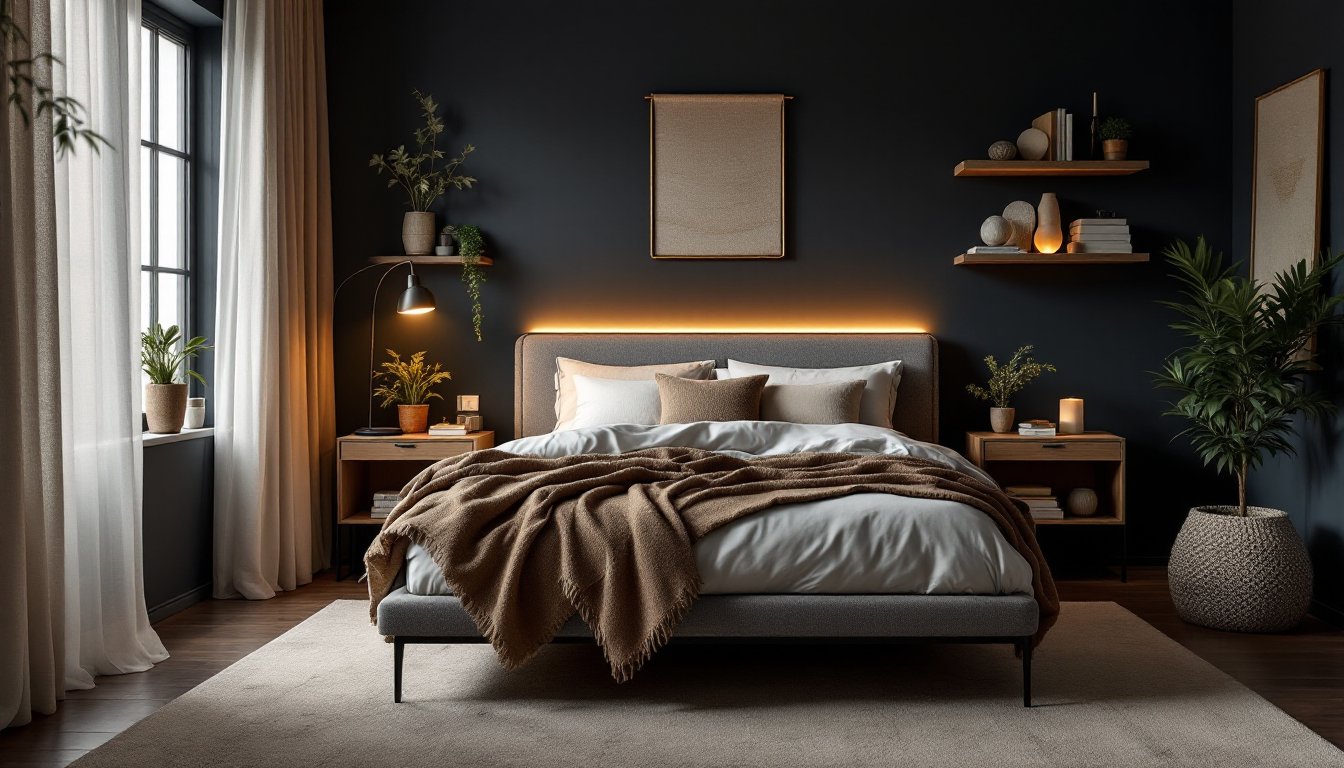
Bedside sconces or reading lamps are essential for task lighting without blasting the whole room. Wall-mounted sconces at 36–40 inches above the floor (or about 12 inches above your headboard) light your pillow without casting shadows. If you can’t or won’t install sconces, a tall arc floor lamp behind or beside the bed works and requires zero wiring. For accent lighting, consider strip lights behind floating shelves, under the bed frame, or along the headboard. These create visual separation and add dimension without being bright. LED strips ($15–$50) run cool, don’t heat up the room, and are simple to install with adhesive backing.
Color temperature matters more in dark rooms. Use warm white (2700K) for bedside and ambient light, it feels cozy and signals your brain to wind down. Cool white (4000K+) in a dark room can feel clinical. Check your light bulb packaging for the Kelvin rating: don’t assume all soft white bulbs are the same warmth. Layered, dimmable lighting prevents your dark bedroom from feeling like a panic bunker when it’s time to actually use it.
Furniture And Layout Tips For Darker Rooms
Dark walls can make a room feel smaller, so furniture placement and scale matter more here than in a light room. Avoid cramming pieces against the walls hoping to “open up” the space, ironically, that makes dark rooms feel more boxed-in. Instead, float your bed in the room if the layout allows, or position key pieces to create visual breathing room. A bed 18–24 inches from the wall, paired with nightstands, anchors the room without closing it off.
Choose furniture with visual lightness: slim-leg beds, open shelving, or glass-topped nightstands reduce the visual weight that dark walls already impose. A solid, heavy bed frame in dark wood against dark walls can feel fortress-like: a platform bed with metal or light-wood legs or a simple bed with an upholstered headboard feels less imposing. If you love a statement piece, make it upholstered in a lighter neutral or have one focal element (like a light-colored rug or headboard) to break up the dark palette.
Rectangular or narrow nightstands take up less visual real estate than chunky cubes. Open shelving or floating shelves, if you have them, add storage without bulk. Keep the floor visible, don’t underbed storage containers that hide the floor line: it closes the room down. A light-colored rug (ivory, taupe, soft gray) anchors the bed zone and visually expands the space underfoot. The rug should be large enough that at least the two sides of the bed are covered: aim for a 5×8-foot minimum if your room is average-sized.
Textiles And Soft Furnishings For Depth And Comfort
Dark walls are a canvas for texture, and this is where textiles save the room from feeling flat. Mix tactile fabrics: linen, velvet, chunky knit, and linen blend in warm neutrals (cream, oatmeal, warm gray) or jewel tones (emerald, sapphire) that complement your wall color without competing. A chunky-knit throw blanket in cream draped over a chair or the foot of the bed adds visual interest and coziness, exactly what a dark bedroom needs to feel like a sanctuary and not a dungeon.
Your bedding is a major player. A white or cream duvet cover or high-thread-count cotton sheets in ivory create immediate visual contrast and make the bed feel crisp and inviting. Layer in a weighted blanket, throw pillows in varied textures, and a linen runner at the foot of the bed. This isn’t decorating fluff: each layer serves the dual purpose of visual balance and physical comfort. Avoid matching sets that feel sterile: mix textures and tones within a cohesive color family.
Curtains or shades need careful thought. Dark-colored curtains intensify the cave effect, so opt for light or warm-toned linen, linen-cotton, or blackout-lined drapes in cream or soft taupe. If your bedroom is also your sleep sanctuary and you need darkness for sleeping, blackout liners behind lighter curtains solve this elegantly, you get visual lightness by day and darkness by night. Heavy velvet drapes in charcoal or navy work if you have loft-height ceilings and the room is large: otherwise, they’ll feel heavy. Throw pillows, a headboard upholstered in a lighter fabric, and soft furnishings are where interior design tips and guides suggest playing with pattern and color without overwhelming the space.
Accent Wall Techniques And Wall Decor
An accent wall is a way to add visual drama without painting the entire room dark, useful if you’re testing the waters or working with a smaller footprint. Paint one wall (typically the wall behind the bed or the wall visible from the entry) in your dark color, and leave the other three walls in white, cream, or a lighter shade of the same color. This creates focal-point interest and prevents the room from feeling uniformly dim.
Wall art and mirrors are your allies in dark bedrooms. Large mirrors (2–3 feet wide) reflect available light and create the illusion of depth: place them opposite a window or across from your bed’s focal point. Avoid small, fussy mirrors that clutter the space: one or two substantial mirrors do more work. Artwork, whether photography, abstract prints, or textured canvas, should have light or metallic elements to pop against dark walls. Gold, brass, or silver frames catch ambient light and add warmth. Black frames disappear into dark walls and can feel heavy: save those for light-colored walls.
Wall-mounted shelving or floating shelves in light wood, white, or metal break up wall monotony and provide visual stopping points. Styled with books, plants (low-light varieties like pothos or snake plants thrive in dark bedrooms), and small sculptures, they add personality without clutter. Avoid overcrowding shelves: negative space prevents the room from feeling cramped. Specific dark bedroom design ideas showcase how layered wall treatments, a mix of color, mirrors, and art, create sophisticated dark rooms that feel intentional.
Creating Balance In Your Dark Bedroom Design
The overarching principle: dark walls are the anchor, but everything else should create contrast and movement. If your walls are navy, let your textiles, lighting, and art be lighter or warmer in tone. If your room is small (under 150 square feet), use more contrast, lighter bedding, bright-toned throws, more task lighting, to prevent a compressed feel. If your room is larger and has good natural light, you can go bolder: darker textiles, moodier accent lighting, and richer jewel tones throughout.
Balance visual weight by anchoring the room with a light-colored rug, a light headboard, or a pale upholstered seating piece. One or two light focal points prevent the eye from landing nowhere. An accent color can also break monotony: teal, burgundy, or warm gold accents in pillows, throws, or artwork add richness without fighting the dark walls. Interior design inspiration from luxury homes and new construction often uses dark bedrooms as a way to create intimacy and drama, proving that dark is a deliberate choice, not a limitation.
Finally, don’t forget air and light at the window. Even in a dark room, sheer curtains or lightweight roman shades let natural daylight in during the day, preventing the room from feeling permanently dark or musty. This subtle shift between daylight and evening mood makes the room feel alive and thoughtfully designed. A dark bedroom is cozy, not gloomy, and that balance comes from mixing dark tones with light accents, texture, and smart lighting.
Conclusion
Dark bedrooms work when you treat them as intentional design choices, not compromises. Paint quality, layered lighting, light-toned soft furnishings, and strategic mirrors transform a dim room into a sophisticated, restful retreat. Start with your wall color and dimmable lighting, then layer in textures and contrast. The result isn’t a cave, it’s a sanctuary you’ll actually want to spend time in.