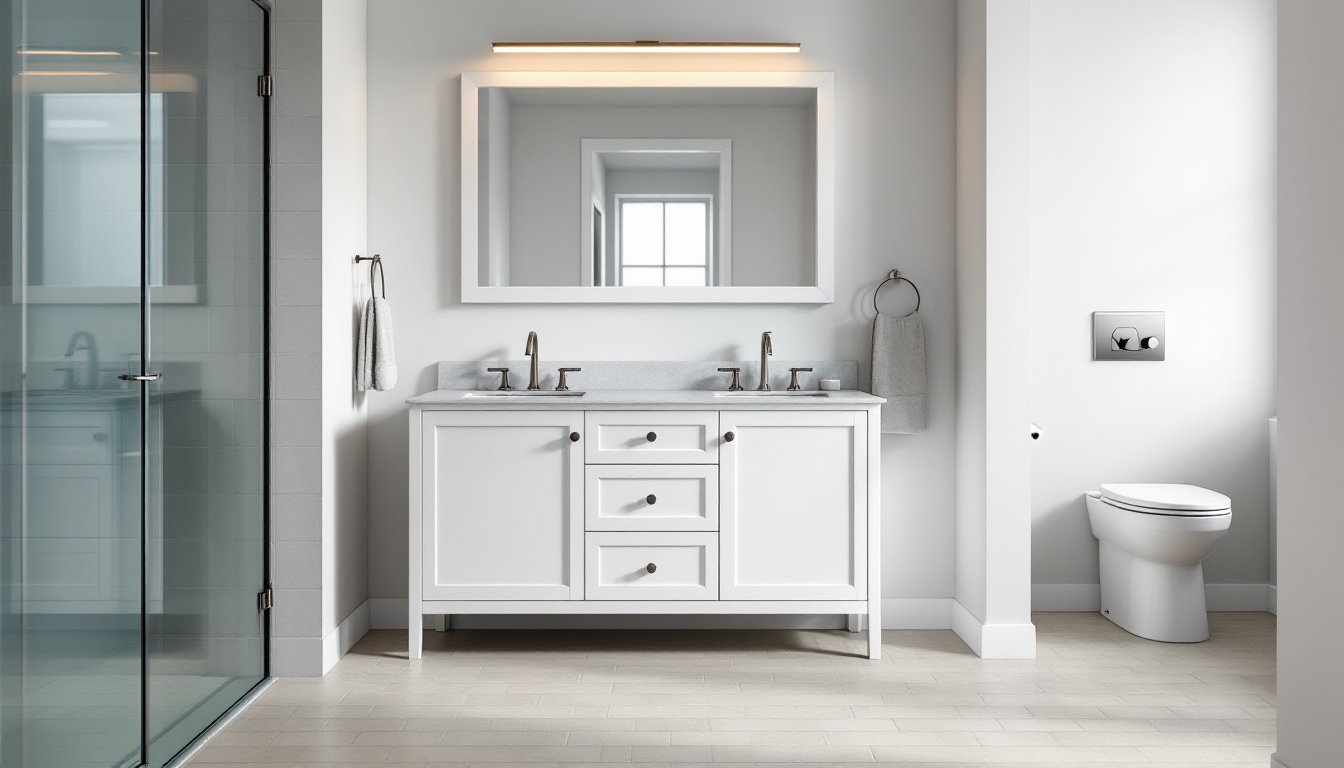
A 40 inch bathroom vanity strikes that sweet spot most homeowners are searching for, roomy enough for dual daily routines, compact enough to fit standard bathroom layouts without overwhelming the space. Whether you’re renovating a half bath or overhauling a master, choosing the right vanity size sets the tone for the entire room. A 40 inch bathroom vanity offers practicality alongside style, giving you ample counter space and storage without the bulk of a 48-inch or 60-inch alternative. This guide walks you through sizing considerations, materials, installation realities, and budget choices so you can pick the right fit for your bathroom.
Table of Contents
ToggleKey Takeaways
- A 40 inch bathroom vanity provides the ideal balance between functionality and space efficiency, consuming just one-third of a standard bathroom width while maintaining proper clearance codes and ventilation.
- A 40 inch bathroom vanity works best with single-sink configurations, leaving 10–12 inches of usable counter space on each side; dual-sink setups typically require 48 inches or wider for comfort.
- Material choices significantly impact durability—plywood cabinets with lacquered finishes resist moisture better than solid wood alone, while quartz countertops outperform marble and granite in bathroom environments.
- Proper ventilation and plumbing placement are critical success factors; moving supply lines adds cost and complexity, so measure existing rough-ins and sketch a floor plan before ordering your vanity.
- Budget options ($200–$500) and mid-range vanities ($500–$1,500) perform well with correct installation and ventilation, often outperforming premium models ($1,500+) if maintenance and moisture control are neglected.
Why 40 Inches Is the Ideal Bathroom Vanity Width
A 40 inch bathroom vanity hits the practical middle ground in a market flooded with options. Most standard bathrooms sit between 5 and 8 feet wide, and a 40-inch vanity consumes just over one-third of that space while leaving room for adequate clearances and ventilation. Building codes typically call for at least 21 inches of clearance in front of any fixture, so a 40-inch vanity works well in bathrooms that aren’t cramped.
The width also aligns with common single-sink configurations. A standard bathroom sink runs 16 to 20 inches across, leaving roughly 10 to 12 inches of usable counter on either side, enough space for soap, toothbrushes, and a towel rack without clutter. If you’re considering a bathroom vanity 40 inches wide with a double basin, you’ll need a deeper cabinet (often 24 inches front-to-back) to accommodate two sinks comfortably and maintain proper spacing between them.
Common Vanity Size Options and Where 40 Inches Fits
Bathroom vanities come in graduated sizes that cater to different footprints and needs. Standard options include 24 inches (powder rooms and tight spaces), 30 inches (small bathrooms), 36 inches (common single-sink standard), 40 inches (our focus), 48 inches (spacious master baths), and 60 inches-plus (spa-like retreats and dual-sink masters). The important bathroom dimensions including vanity widths and fixture spacing show why 40 inches sits perfectly between cramped and excessive. It’s the Goldilocks choice for mid-sized bathrooms, particularly when homeowners want a little extra counter without a footprint that dominates the room.
Styles and Materials for 40 Inch Vanities
Modern 40 inch bathroom vanities come in styles ranging from shaker-door cabinetry to sleek floating designs. Your choice depends on bathroom design direction, farmhouse, contemporary, transitional, or spa-inspired, and the materials that suit your daily maintenance reality.
Solid wood construction (oak, maple, birch) looks warm and traditional but demands moisture management. Bathrooms generate steam constantly, and wood swells and warps without proper finish and ventilation. Plywood cabinets with hardwood veneer offer similar looks at lower cost while reducing warping risk. Medium-density fiberboard (MDF) is budget-friendly and moisture-resistant when sealed properly, though it lacks the longevity of solid wood or plywood. Lacquered finishes resist moisture better than stain-only options, especially in humid climates.
Countertop materials deserve equal thought. Solid surface options (like Corian) are seamless and non-porous, resisting mold and staining. Quartz engineered stone handles cosmetics and soap bottles without etching, unlike natural marble or granite, which are porous and require sealing. Laminate works on a budget and resists moisture if edges are sealed carefully, but it won’t match the durability of quartz or solid surface.
Cabinet Styles to Match Your Bathroom Design
Shaker-style cabinets remain the most versatile choice for a 40 inch bathroom vanity. Flat or slightly inset panels work with both traditional and modern décor, and hardware swaps easily if you change design direction. Floating vanities (wall-mounted with no toe kick) create visual lightness and simplify floor cleaning, though installation requires solid backing and proper reinforcement behind drywall. Open shelving below the sink looks airy and trendy but sacrifices storage and displays plumbing, which many homeowners want hidden.
Two-tone designs, paired painted base with wood or stained top, are popular right now and work across cottage and contemporary schemes. White or soft gray bases brighten smaller bathrooms, while darker wood tones add richness to spacious master baths. Houzz offers design inspiration and visualizations to see how different styles and finishes perform in real spaces, which is invaluable before committing to a 40 inch bathroom vanity style.
Installation and Space Planning Tips
Before ordering a 40 inch vanity, measure the wall space carefully and check plumbing rough-ins. Existing supply lines and drain stacks rarely sit where you want them, and moving them adds cost and complexity. If plumbing is already centered on your wall, a 40-inch vanity often centers well. If not, you might need to shift lines or reposition the vanity, both call for a licensed plumber in most jurisdictions.
Clearance matters. Leave at least 21 inches from the vanity front to the opposite wall (toilet, tub, or door swing). If your bathroom is 5 feet wide and the door swings inward, a 40-inch vanity positioned opposite leaves just 10 inches at the door side, tight and awkward. Sketch a floor plan to scale before you order. Most home centers and design sites let you visualize placement virtually.
Ventilation is critical. Moisture lingers around bathroom vanities, and poor ventilation promotes mold in cabinets and walls. Ensure your exhaust fan vents outdoors (not into an attic), runs for at least 20–30 minutes after showers, and matches your bathroom’s volume (typically 1 CFM per square foot of floor area). A 40 inch bathroom vanity doesn’t demand special ducting, but neglecting ventilation will rot any cabinet eventually.
Sink Configuration Options and Storage Considerations
Single-sink 40 inch vanities keep costs down and simplify plumbing. Dual-sink versions (common in master baths) require wider cabinets, typically 48 inches or more, or careful planning if you insist on 40 inches. Some compact 40-inch double-sink designs exist but sacrifice countertop space or cabinet depth. If two people share a bathroom daily, stepping up to 48 inches is often worth the extra 8 inches.
Storage capacity varies by cabinet design. A standard 40 inch bathroom vanity includes one or two drawers above and cabinet doors below. Deeper cabinets (24-inch depth) hold more under-sink storage, toilet paper, cleaning supplies, extra linens. Shallower options (18-20 inch depth) work in tight powder rooms but compress usable space. Open shelving underneath adds visual interest but reduces privacy for plumbing lines and cosmetic clutter.
Sink undermount versus drop-in: Undermount sinks (mounted from below the countertop) look seamless and simplify countertop cleaning but cost more and require solid countertop material that won’t crack. Drop-in sinks (mounted from above with a rim) are budget-friendly and work with laminate or weaker materials. Home renovation cost guides and project planning tools help you estimate labor and material costs before committing to a specific sink style.
Budget-Friendly vs. Premium 40 Inch Vanity Choices
A budget 40 inch bathroom vanity can run $200–$500 from big-box retailers. These typically feature MDF cabinets with lacquer finishes, laminate countertops, and basic hardware. They’re not junk, many carry multi-year warranties and perform well if installed correctly and ventilated properly. Trade-offs include thinner materials, less-refined hardware feel, and limited customization.
Mid-range options ($500–$1,500) include plywood cabinets, solid surface or quartz countertops, better hardware, and finish choices. Most homeowners land here, balancing durability with reasonable expense. These vanities survive 10–15 years of daily family use without significant issues if moisture and ventilation are managed.
Premium 40 inch bathroom vanities ($1,500–$3,000-plus) feature solid wood, custom finishes, high-end hardware, integrated lighting or mirrors, and thicker countertops. Longevity extends to 20+ years, and they often feel and look noticeably better. Installation labor adds $300–$800 depending on plumbing adjustments and local rates.
Cost doesn’t guarantee satisfaction. A $400 vanity installed by someone who seals edges, ensures proper ventilation, and respects plumbing clearances outperforms a $2,000 vanity in a poorly ventilated bathroom with DIY installation mistakes. Start with realistic expectations: bathroom vanities take daily water exposure, so investing slightly above the cheapest option usually pays dividends in durability and peace of mind.
When comparing options, confirm what’s included: sink, faucet, mirror, delivery, and installation labor. Some retailers bundle these: others sell cabinets only. Add contingency (10–15%) to your budget for unforeseen plumbing issues, drywall repair, or hardware upgrades.
Making Your 40 Inch Bathroom Vanity Choice
A 40 inch bathroom vanity delivers the versatility most homeowners need without overcommitting to size. It pairs well with single sinks in everyday bathrooms and works in well-proportioned spaces where smaller feels cramped and larger looks excessive. Prioritize moisture-resistant materials, adequate ventilation, and accurate plumbing placement before installation. Whether you choose budget-conscious or premium, thoughtful planning and honest assessment of your bathroom’s dimensions and ventilation ensure your vanity looks and performs well for years.