The tiny house movement isn’t a passing fad, it’s a fundamental shift in how Americans think about home. In 2026, more homeowners are questioning the traditional single-family suburban dream and exploring whether smaller, intentionally designed spaces can deliver greater freedom and financial breathing room. Unlike the Instagram-filtered minimalism trend, the practical tiny house movement addresses real problems: skyrocketing property costs, maintenance burden, and the desire for more flexible living arrangements. Whether you’re drawn to the idea of owning outright, reducing debt, or simply downsizing from a house that’s become too much to manage, understanding what tiny living actually means, and whether it fits your life, starts with the basics.
Table of Contents
ToggleKey Takeaways
- The tiny house movement offers practical financial benefits, with homes costing $60,000–$150,000 versus a median U.S. home price of $430,000, and operating costs running 60–70% lower than traditional houses.
- Zoning laws are gradually opening in cities like Austin, Minneapolis, and Portland, making tiny house ownership increasingly viable in 2026 with improved financing options and refined construction quality.
- Successful tiny house living requires careful upfront design focused on three non-negotiables—bedroom count, kitchen functionality, and bathroom layout—plus strategic use of multi-functional furniture and vertical storage.
- Zoning restrictions and resale challenges remain significant barriers, with many single-family neighborhoods prohibiting dwellings under a certain square footage, making local code verification essential before investing.
- Tiny house living only succeeds when your lifestyle, work situation, and personal values genuinely align with downsized spaces, not as a quick fix for deeper financial or lifestyle problems.
- Before committing to tiny living, visit completed homes, rent one for a weekend, and speak directly with residents about real trade-offs between space constraints and the promised freedoms.
What Is the Tiny House Movement and Why It’s Gaining Momentum
A tiny house is typically defined as a dwelling of 400 square feet or less (though interpretations vary). The real distinction isn’t just size: it’s intention. Residents pare down possessions, optimize every square inch, and often embrace sustainable practices like composting toilets, rainwater collection, and energy-efficient systems.
The movement gained traction after the 2008 financial crisis when people began questioning whether a large mortgage aligned with their values. Over the past 15 years, it’s evolved from a countercultural experiment to a legitimate housing option. Rising real estate prices, inflation, and the COVID-19 pandemic’s work-from-anywhere reality accelerated adoption. Young adults priced out of traditional homeownership see tiny homes as an entry point to ownership. Retirees appreciate lower living costs and less upkeep. Some people simply want their financial lives back, a 400-square-foot home with no mortgage beats a 3,000-square-foot house with 30 years of payments.
What makes 2026 different is infrastructure. Zoning laws are gradually opening in cities like Austin, Minneapolis, and Portland. Financing options exist (though they’re not yet mainstream). Manufacturers have refined design and construction quality. The movement is no longer fringe: it’s becoming viable.
Financial Benefits That Make Tiny Houses Attractive to Homeowners
The math is compelling. A typical tiny house costs $60,000–$150,000 to build or purchase (prices vary widely by region and material quality). That’s a fraction of the U.S. median home price of around $430,000. For many buyers, it means owning outright, taking on a small mortgage instead of a 30-year debt sentence, or freeing up capital for investment or emergency reserves.
Operating costs plummet. Utilities for 400 square feet cost roughly 60–70% less than for a 2,000-square-foot house, heating, cooling, and electricity all scale down. Property taxes drop proportionally. Insurance premiums are lower. Maintenance is simpler: fewer windows to caulk, less roofing to replace, smaller yards to maintain. A burst pipe affects 400 square feet, not 2,000.
There’s also the hidden financial gain of simplification. When you live in less space, you buy less stuff. Impulse purchases and lifestyle inflation become harder to justify. Several tiny house residents report spending 30–40% less annually than they did in larger homes, simply because there’s nowhere to put it.
But, don’t assume tiny means cheap. High-quality finishes, appliances, and systems add up. A poorly built tiny house becomes a money pit just like any poorly built home. And financing remains difficult, most lenders and mortgage brokers aren’t equipped to handle them, though this is changing.
Practical Challenges and Limitations You Should Know
Tiny living isn’t for everyone, and honesty is essential here. Zoning restrictions remain the biggest barrier. Most single-family neighborhoods don’t permit dwellings under a certain square footage. Accessory dwelling units (ADUs) have looser rules in some states, but you’ll still need to check local codes before investing. Parking, setback requirements, and minimum lot size rules vary by jurisdiction, so verify feasibility before falling in love with the concept.
There’s also the practical reality of resale. While tiny house interest is growing, a niche property is harder to sell than a 4-bedroom suburban ranch. Resale value depends heavily on location, build quality, and whether the property is on owned land or a leased lot. A poorly maintained or oddly designed tiny house could become an albatross.
Living in tight quarters demands personality fit. Couples, families with young children, people who work from home, and those with mobility issues may find 400 square feet unsustainable. Noise, lack of private workspace, and storage limitations create friction. Also consider lifestyle: if you entertain frequently, host aging parents, or need dedicated hobby space, you’ll feel the squeeze.
Construction challenges exist. Many builders lack tiny house experience, which means poor execution, cost overruns, and quality issues. Working with unfamiliar lenders and insurance companies adds complexity. And many tiny houses are movable (built on trailers), which introduces RV-style concerns: septic system maintenance, hitch inspection, and the stress of towing.
Designing and Building Your Own Tiny Home
If you’re considering a DIY build or working with a builder, deliberate design upfront saves money and regret later. Start with three non-negotiables: bedroom count, kitchen functionality, and bathroom layout. Everything else flows from those anchors.
Space-Saving Design Strategies for Tiny Houses
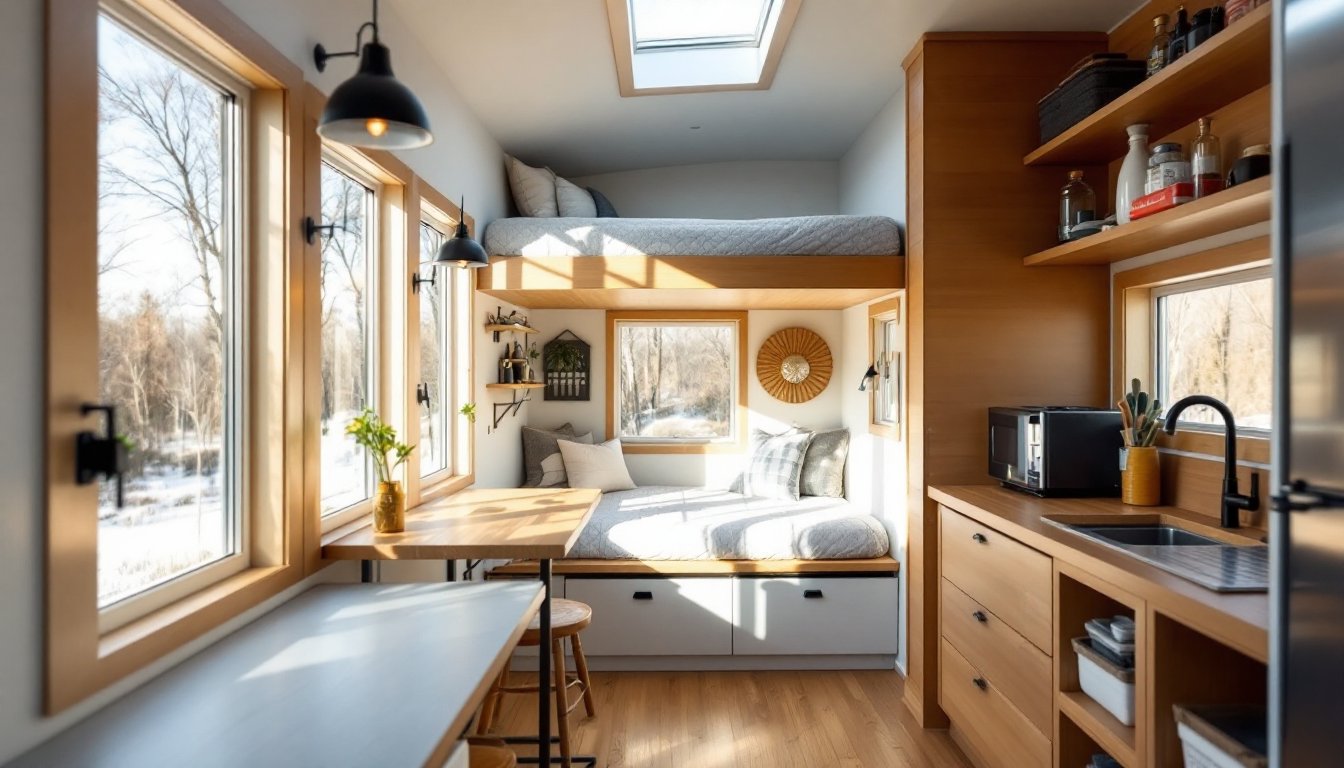
Multi-functional furniture is essential. A raised bed with storage drawers below, a dining table that folds or extends, or a sofa that converts to a guest bed reclaims square footage. Vertical storage, floor-to-ceiling shelving, wall-mounted desks, overhead cabinets, exploits unused airspace.
Open floor plans feel larger (though they sacrifice privacy and sound insulation). Large windows and light colors amplify perceived space. A skylight in the bedroom or over the kitchen adds brightness without consuming square footage.
Kitchens in tiny homes need tight organization. Under-cabinet pull-out drawers, wall-mounted racks for oils and spices, and compact appliances (a 24-inch fridge, a half-size dishwasher) require every inch to earn its keep. The same goes for bathrooms: a corner sink, a compact shower stall, and recessed medicine cabinets replace sprawling layouts.
Consider material carefully. Drywall and framing must meet code. Flooring should be durable (cheaper finishes fail faster in high-traffic tiny homes). Insulation and air sealing are critical, poor insulation makes 400 square feet feel cramped in winter when heating bills spike.
Budget realistically. A DIY shell (framing and roof) might cost $20,000–$35,000. Finishing (electrical, plumbing, insulation, drywall, finishes) easily doubles that. Professional builds range $60,000–$150,000 depending on quality and complexity. Don’t underestimate labor: most DIYers benefit from hiring skilled tradespeople for electrical and plumbing work to avoid permit issues and safety risks.
Finding Your Tiny House: Purchase or DIY Build Options
You have three main paths: buy a completed tiny house, contract with a builder, or build it yourself.
Buying completed is fastest. Tiny house manufacturers and builders (often found through Facebook groups, Etsy, or specialized platforms) offer move-in-ready homes or semi-complete shells. You pay for experience and get a warranty. The downside: limited customization and higher cost.
Hiring a builder means custom design within your budget. Interview builders thoroughly, ask for references, and verify they understand local codes. A contract should specify materials, timeline, and change-order procedures. This option costs more upfront but avoids DIY mistakes.
Building yourself requires skills or willingness to learn. You’ll save money but invest time, frustration, and risk. Mistakes are expensive, a framing error or plumbing leak can stall progress and require professional fixes. Self-building works best if you have construction experience, access to tools, and flexibility on timeline.
Regardless of route, secure financing early. Traditional mortgages are difficult: some credit unions and niche lenders specialize in tiny homes. Personal loans, construction loans, or cash purchases are common alternatives. Land ownership is also critical, owning your lot eliminates lease concerns and builds equity.
Research zoning and permitting before committing. Some jurisdictions ban tiny homes outright: others require ADU status or specific setbacks. A $100,000 build on land where tiny houses are prohibited is a costly lesson. Work with your local planning department or hire a land-use consultant if regulations are murky.
Is the Tiny House Movement Right for Your Lifestyle?
Tiny living succeeds when values align. If financial freedom, reduced environmental impact, and simplification resonate, tiny houses deliver. If you’re hoping the square footage alone will transform your life, without addressing how you actually live, you’ll struggle.
Ask yourself honestly: Do you work from home, and if so, can you function in shared office space? Do you have guests regularly, or can visitors tolerate sleeping in a bedroom that doubles as a living room? Are you comfortable with unconventional design, or do you crave traditional layouts? Can you commit to regular decluttering, or will you resent the lack of attic space after six months?
Consider life stage. A couple in their 30s with no kids has different needs than a family planning to grow. Tiny houses can work for families, but intentional design and buy-in from all residents is non-negotiable. Aging parents with mobility issues may find 400 square feet accessible or frustrating depending on layout.
The tiny house movement is real, expanding, and increasingly viable. But it’s not a solution to deeper financial or lifestyle problems, it’s a tool that works when your daily reality matches the space. Visit completed tiny homes, rent one for a weekend, and talk to residents about trade-offs. Their honest answers will tell you more than any blog post. The goal isn’t to convince you tiny is better: it’s to help you decide if it’s better for you.