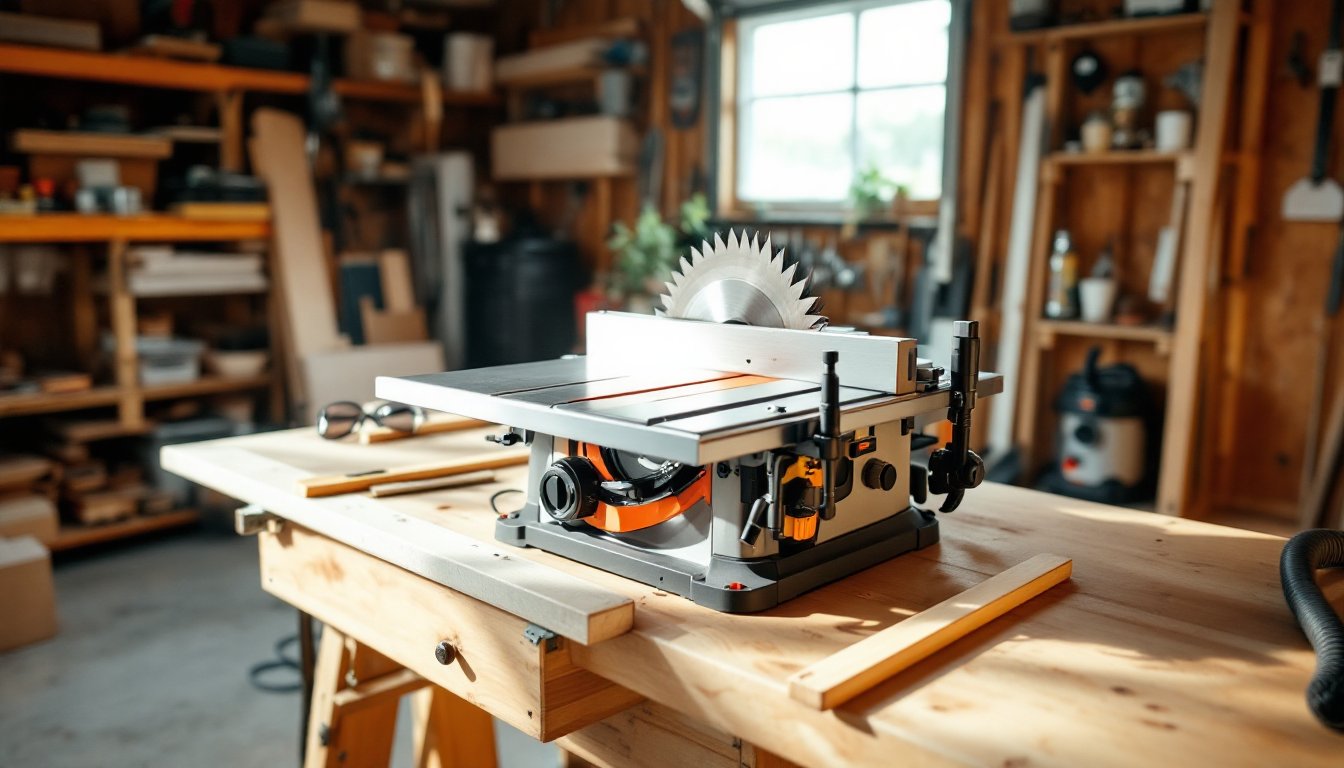
A benchtop table saw sits at the sweet spot between affordability and capability. It’s compact enough to fit in a garage or basement, yet powerful enough to rip boards, crosscut panels, and make angled cuts that would take forever with a hand saw. Whether you’re framing shelves, building a deck, or tackling furniture projects, a benchtop table saw opens up a whole class of work you can tackle alone. This guide walks you through what to look for, how to set one up safely, and projects that make this tool pay for itself fast.
Table of Contents
ToggleKey Takeaways
- A benchtop table saw offers an affordable, compact alternative to full-size saws, weighing 40–100 pounds and requiring only a standard 15-amp household outlet while delivering professional-quality rips, crosscuts, and angled cuts.
- Choose a benchtop table saw based on motor power (1.5–3 hp depending on material hardness), blade diameter (8 or 10 inches), and fence reach (24–30 inches minimum) to match your intended projects and achieve consistent, clean cuts.
- Proper setup and monthly maintenance—including blade alignment checks, dust collection, and blade sharpening every 40–50 hours—ensures your benchtop saw remains accurate and extends its lifespan.
- Always follow critical safety practices: wear safety glasses and hearing protection, use a push stick for narrow boards, keep the blade guard in place, and maintain a safe stance to the side of the blade to prevent kickback injuries.
- A benchtop table saw quickly pays for itself on common DIY projects including shelving, cabinet building, decking, furniture construction, and plywood breakdown—tasks that would take significantly longer with hand tools alone.
What Is a Benchtop Table Saw?
A benchtop table saw is a stationary cutting tool that sits on a workbench or stand. Unlike full-size contractor or cabinet saws, benchtop models weigh between 40 and 100 pounds, making them portable without being flimsy. The saw has a rotating circular blade (typically 8 or 10 inches in diameter) mounted under a flat table surface. You feed material across the table, guided by a rip fence (for lengthwise cuts) or a miter gauge (for crosscuts and angles).
The main difference between benchtop and larger saws is power and precision. Benchtops draw less amp power, often 15 amps on a standard household outlet, and they lack the mass that dampens vibration in heavier machines. That said, they’re more than adequate for most home projects. A benchtop saw gives you clean, straight cuts that hand tools can’t match, and it saves hours of labor on repetitive cuts. The speed and accuracy make even a beginner look competent.
Key Features to Look For When Choosing a Benchtop Table Saw
Picking the right benchtop table saw comes down to matching features to the work you plan to do. Not every saw is the same, and the difference between a $200 model and a $600 model shows up in cut quality, durability, and accuracy after a year of use.
Motor Power and Blade Specifications
Most benchtop saws run on single-phase motors rated between 1 and 3 horsepower. A 1.5 hp motor is standard and handles hardwoods and dimensional lumber without bogging down. If you’re cutting pressure-treated lumber regularly or working with dense exotic woods, look for at least 2 hp. Underpowered motors strain when making deep cuts, and the blade bogs down, leaving a rough, scorched edge that requires sanding.
Blade diameter matters too. 8-inch blades are common on smaller benchtop saws and cut up to about 2.5 inches deep. 10-inch blades cut up to 3.5 inches, which handles 2x4s and thicker stock comfortably. Check the maximum rip width as well, this is how far from the fence you can cut. A fence that extends at least 24 to 30 inches from the blade gives you room for standard sheet goods and boards.
Look for a saw with precise depth and angle adjustments. Sloppy controls lead to inconsistent cuts. A handwheel or quick-release lever for blade height and tilt angle should move smoothly without play. Table flatness matters: run your hand across the surface and feel for warping. A flat table keeps cuts square and prevents binding.
Portability and Storage Considerations
A benchtop saw’s main selling point is that you can move it. Check the weight and whether folding legs or a mobile base are included. 40 to 60 pounds is manageable for one person: heavier models may need a hand truck. If your workshop is tight, a portable stand that lets you break down the saw and store it vertically saves valuable space.
Dust collection also affects storage and cleanup. A saw with a dust port (usually 4 inches diameter) can connect to a shop vac, reducing the mess. Without one, you’re sweeping sawdust for days. Look for a saw where the dust port is accessible and not hidden behind awkward guards.
On the Family Handyman site, they emphasize checking tool reviews for real-world feedback on vibration and noise. A wobbly saw that hums loudly is frustrating in a garage workspace.
How to Set Up and Maintain Your Benchtop Table Saw
Out of the box, your benchtop saw needs prep work before you make your first cut. Skipping this step leads to sloppy results and premature wear.
First, place the saw on a stable, level surface, a dedicated stand or sturdy workbench. Plug it in and let it run for 30 seconds with no load to break in the motor bearings. Stop and check that the blade spins freely with no rubbing or grinding noise. Spin the blade by hand (unplugged) and listen for any drag.
Next, check blade alignment. The blade should be perfectly perpendicular to the table. Use a carpenter’s square or a dedicated blade square placed against the blade and table. Loosen the tilt mechanism and adjust until the blade sits square. Then check the rip fence, it should run parallel to the blade. If the fence is angled, your rips will taper. Most saws have an adjustment bolt for fence alignment.
Before each session, inspect the blade for cracks or missing teeth. A damaged blade is dangerous and tears wood. Replace it immediately. Clean out accumulated sawdust from the table and under the blade housing using a brush and shop vac. Dust buildup reduces ventilation and affects blade cooling.
Maintenance is minimal but essential. Wipe the table with a dry cloth after each use to prevent rust. Once a month, check all bolts and handles for tightness, vibration works things loose. If the motor sounds strained or the saw bogs down, don’t ignore it. The problem usually stems from a dull blade or buildup of resin on the blade teeth. Sharpen or replace the blade every 40 to 50 hours of use, depending on material hardness.
Lubrication is rare on modern benchtop saws: most motors are permanently sealed. If you have an older model or notice squeaking, a small amount of light machine oil on pivot points helps. Don’t over-oil, you’ll attract dust and gum things up.
Safety Tips for Benchtop Table Saw Operation
A table saw is one of the fastest tools in the shop. Respect it, and it respects you. Carelessness leads to serious injury.
Always wear safety glasses, a shard of wood or a broken tooth flies at you instantly. Hearing protection is also essential: table saws run at 80+ decibels over 8 hours. Wear close-fitting clothing without dangling sleeves or ties. Tie back long hair. Loose fabric can wrap around the blade in a fraction of a second.
Never reach over or under the blade while it’s spinning. Turn off the saw and wait for the blade to stop completely before removing a piece. Use a push stick, a wooden block with a notch that keeps your hands at least 6 inches from the blade, for ripping boards narrower than 6 inches. If you can’t safely hold the piece, don’t cut it.
Keep your body out of line with the blade. Stand to one side, not directly behind the board you’re cutting. Kickback, when the blade catches the wood and hurls it back toward you, is rare on benchtop saws, but it happens. A blade guard and splitter (a thin metal plate behind the blade that keeps the wood from closing on the blade and binding) are essential. Don’t remove them.
Before every cut, make sure the rip fence is tight and the miter gauge (if you’re using one) is snug. Loose guides cause binding. Never make adjustments while the blade is running. Let the blade reach full speed before starting a cut.
Check the This Old House resource library for detailed safety videos on table saw operation, seeing it in action makes the steps stick better.
Best Benchtop Table Saw Projects for Home Improvement
A benchtop table saw justifies itself on a handful of common projects. Here’s where this tool shines.
Shelving and storage. Ripping dimensional lumber to custom widths, cutting shelf supports, and crosscutting boards to length. You can build adjustable shelves in an afternoon instead of spending days with a handsaw.
Cabinet building. If you’re installing a vanity, pantry shelves, or base cabinets, you’ll rip stiles and rails from clear pine or plywood, then assemble them with pocket holes or traditional joinery. The saw makes all the straight cuts clean and uniform.
Decking and outdoor projects. Cutting boards for a small deck, pergola, or raised garden bed. A benchtop saw handles pressure-treated lumber, though you’ll wear a dust mask, the preservatives in the wood create fine, irritating particles.
Furniture building. Cutting components for side tables, benches, or cabinets. The precision of a table saw means joints fit tight without hours of hand-planing.
Plywood breakdown and edge trim. Breaking 4×8 sheets into manageable pieces, then ripping and crosscutting them for shelving or backing. Applying edge banding (thin veneer strips) to plywood edges gives a finished look.
On Fix This Build That, you’ll find dozens of benchtop table saw projects scaled for DIYers, from simple storage builds to more involved furniture. Most projects take a weekend and use common hardware from the home center.
The key is matching the saw to the job. For basic ripping and crosscutting, a benchtop saw is ideal. For angled or decorative cuts, a miter saw complements it nicely. For sheet goods, a circular saw with a guide works, but the table saw is faster and cleaner. Build a small collection of tools, and you’ll find the benchtop saw becomes the workhorse of your workshop.