A weed-filled lawn is one of the most frustrating home maintenance problems, and one of the most common. Whether you’re dealing with stubborn dandelions, creeping clover, or crabgrass, the good news is that getting rid of weeds in lawn is absolutely manageable with the right approach. Killing lawn weeds doesn’t always mean reaching for chemicals: there are proven methods ranging from good old-fashioned hand-pulling to targeted herbicides and organic solutions. This guide walks you through the best way to kill weeds in lawn, covers lawn weeds control strategies that work, and explains how to prevent weeds in lawn from taking over in the first place. Let’s get your yard back in shape.
Table of Contents
ToggleKey Takeaways
- The best way to kill weeds in lawn depends on the weed type—broadleaf weeds respond to selective herbicides, grassy weeds need specific products like dithiopyr, and hand-pulling works for small infestations.
- Manual removal is most effective when soil is wet; pull slowly at an angle and remove at least 6 inches of root to prevent regrowth of deep-rooted perennials.
- Selective post-emergent herbicides containing 2,4-D or dicamba quickly eliminate broadleaf weeds in 7–14 days, while non-selective options work only on problem areas away from desirable grass.
- Organic alternatives like vinegar and boiling water are chemical-free but require frequent reapplication and work best on young weeds or seedlings rather than established plants.
- Consistent lawn maintenance—keeping grass 2.5–3.5 inches tall, watering deeply, fertilizing regularly, and aerating annually—prevents 80% of weed problems and eliminates the need for constant treatment.
- Corn gluten meal as a pre-emergent can reduce new weed seedlings by up to 60%, but always wait 4–6 weeks before overseeding to avoid suppressing desirable grass.
Understanding Your Weed Problem
Before you grab any tool or spray, identify what you’re actually fighting. Lawn weeds fall into three main categories: broadleaf weeds (dandelions, clover, plantain), grassy weeds (crabgrass, foxtail), and sedges (nutgrass). Each type responds differently to removal methods and herbicides, so misidentifying them wastes time and money.
Broadleaf weeds are usually easier to spot, they have wide, flat leaves that stand out against grass. Grassy weeds look like thin grass themselves, making them trickier to catch early. The timing matters too. Annual weeds germinate at specific seasons (crabgrass in spring, for instance), while perennial weeds like dandelions and thistles come back year after year unless you kill the entire root system.
Walk your lawn on a dry day and note which weeds dominate and where they cluster. Problem patches suggest soil compaction, poor drainage, or low-nutrient conditions, all things you’ll need to address for prevention. A small weed problem caught early is infinitely easier to handle than a lawn overtaken by mature plants.
Manual Removal: The Chemical-Free Approach
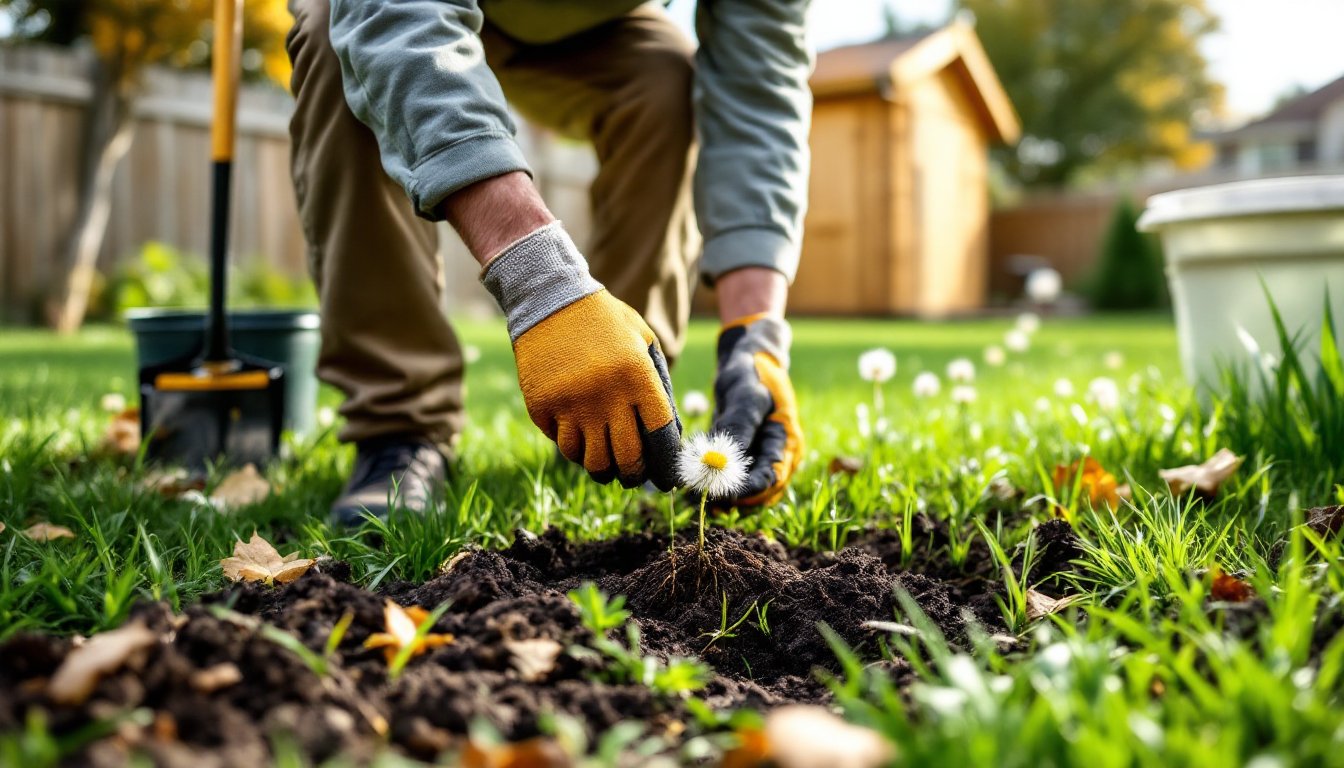
Hand-pulling and digging are the most direct way to kill weeds in lawn without chemicals. It sounds old-school, but it works, especially for small infestations or isolated problem plants. The key is pulling at the right time and getting the whole root out.
Hand-Pulling and Digging Techniques
Timing is everything. Pull weeds after rain or water your lawn thoroughly a few hours before. Wet soil loosens around the root system, making extraction cleaner and less likely to snap the root off underground. Dry soil often breaks roots apart, leaving fragments that regrow.
For shallow-rooted weeds like clover or young dandelions, grasp the plant as close to the soil as possible, then pull slowly and steadily at a slight angle. Don’t yank straight up, you’ll break the crown. For deep-rooted perennials like mature dandelions or thistles, use a weeding fork or narrow spade to dig down alongside the root, then lever the plant out. Aim to remove at least 6 inches of root: even small fragments can regenerate.
For larger areas, a long-handled weeding tool saves your back. Tools like the Fiskars Stand-Up Weeder or similar designs let you stand while you work and often have a trigger mechanism that grasps and lifts roots in one motion. Wear work gloves (nitrile or leather) to protect your hands and improve grip on slippery stems.
After removal, fill the hole with topsoil or compost and reseed if needed. Bare patches invite new weeds, so don’t leave holes behind. For killing lawn weeds this way, expect to hand-pull every 2–3 weeks during the growing season, or as new seedlings emerge.
Herbicide Solutions for Fast Results
Herbicides are the fastest way to kill lawn weeds if you’re short on time or dealing with a large infestation. The two main types are selective herbicides (kill broadleaf weeds but spare grass) and non-selective herbicides (kill everything they touch).
Selective post-emergent herbicides are your go-to for established broadleaf weeds in turf. Products containing 2,4-D, MCPA, or dicamba are proven performers and widely available. They work by disrupting the plant’s growth hormones. Mix and apply according to label directions, usually in early morning or late evening when weeds are actively growing and before rain. Wear safety glasses, gloves, and long sleeves. Most selective herbicides need 7–14 days to show full effect: the weeds will wilt, yellow, and eventually die.
For grassy weeds like crabgrass, you’ll need a grass-specific herbicide such as those containing dithiopyr or quinclorac. Timing here is critical, apply before crabgrass seeds germinate in spring (often mid-April in northern climates, earlier in the South). Mistime it and you’re fighting active plants, which are harder to kill.
Non-selective herbicides like glyphosate (Roundup) kill any plant. They’re useful for clearing weeds from driveways, gravel paths, or before seeding a new lawn, but never spray them near grass you want to keep. Use a sprayer with a narrow nozzle or shield to avoid drift onto desirable plants.
Always read the label. Some products aren’t safe on newly seeded lawns, and you may need to wait days or weeks after application before pets and kids can return to treated areas. Store herbicides in a cool, dry place away from children and pets.
Natural and Organic Weed Killers
If you prefer to avoid synthetic chemicals, natural and organic weed control methods exist, though they usually require more frequent application or work better on young, tender weeds.
Vinegar (5–20% acetic acid) is a popular DIY option. Spray it directly on weed foliage on a sunny day: the acid damages leaves, and the plant weakens. Horticultural vinegar at 20% acidity works faster than household vinegar (5%), but both require repeated applications every 5–7 days. Vinegar doesn’t kill roots reliably, so perennials often regrow. It’s most effective on annual weeds or seedlings.
Boiling water is free and non-toxic. Pour it directly on weeds in pathways or cracks where you don’t care about adjacent plants. The heat disrupts cell structure. It won’t kill deep roots but works well for small, shallow-rooted invaders. Be careful not to splash on your skin or nearby desirable plants.
Corn gluten meal is a natural pre-emergent that inhibits weed seed germination. Spread it on your lawn in early spring or fall. It won’t kill existing weeds, but it reduces new seedlings by up to 60%. The downside: it also suppresses desirable grass seed, so wait 4–6 weeks after application before overseeding.
Herbicidal soaps and oils (like those based on clove or citric acid) are approved for organic gardening and kill soft-bodied weeds on contact. They’re less harsh than vinegar but still need repeated applications and work best on young plants.
Research from The Spruce and other gardening authorities confirms that organic methods excel at preventing infestations but are slower for active weed control than synthetics. Plan accordingly if you’re committed to chemical-free lawn care, you’ll invest more time and vigilance.
Prevention and Lawn Maintenance Strategies
The best way to avoid spending months killing lawn weeds is to prevent them in the first place. A thick, healthy lawn crowds out weeds naturally.
Mow high and often. Keep grass 2.5–3.5 inches tall (check your grass species for specifics). Taller grass shades the soil, reducing weed seed germination. Mow every 5–7 days during the growing season: don’t remove more than one-third of the blade in a single cut, or you’ll stress the grass.
Water deeply and less frequently. Shallow, frequent watering encourages weed seeds to germinate and weakens grass roots. Water early morning, applying 1–1.5 inches per week (adjust for rainfall). Deep, infrequent watering strengthens grass roots and helps them outcompete shallow-rooted weeds.
Fertilize on schedule. A well-fed lawn is dense and vigorous. Apply a balanced fertilizer in spring and fall, following soil test recommendations if available. Overfertilizing promotes soft growth that’s prone to disease, so don’t overdo it.
Aerate and overseed annually. Compacted soil invites weeds. Core aeration (removing small plugs of soil) relieves compaction and improves root depth. Overseed afterward with quality grass seed suited to your climate. Dense turf physically excludes weed seedlings.
Fill bare spots immediately. Bare patches are open invitations for weeds. Rake out dead grass, loosen the soil, add topsoil, and reseed. Keep the area moist until grass is established.
Address drainage issues. Standing water and soggy soil create conditions for certain weeds and diseases. If you have a chronically wet area, consider French drains or adjusting grading. Resources like Gardenista offer comprehensive guides on landscape grading and drainage solutions.
Consistent lawn maintenance, mowing, watering, and fertilizing properly, prevents 80% of common weed problems. A well-maintained lawn is your best herbicide.
Conclusion
Killing lawn weeds and preventing them from returning requires matching the right method to your situation. Hand-pulling works for small problems and chemical-free yards. Selective herbicides handle broadleaf and grassy weeds fast. Organic solutions suit those committed to avoiding synthetics. But the real secret, the one that ends the cycle, is lawn maintenance. Mow, water, fertilize, and aerate consistently, and weeds lose their foothold. Start now, stay consistent, and you’ll have a lawn you’re genuinely proud of.