Your outdoor kitchen is only as good as its countertops. They take the abuse, sun, rain, temperature swings, spilled marinades, and countless dinner parties, so choosing the right outdoor kitchen countertop material matters more than picking the grill. The best choice depends on your climate, budget, cooking style, and how much maintenance you’re willing to handle. Whether you’re building from scratch or replacing worn surfaces, understanding the pros and cons of each material helps you make a decision you won’t regret in five years. This guide walks through the top outdoor kitchen countertop options available in 2026, breaking down durability, maintenance, cost, and aesthetic fit for your setup.
Table of Contents
ToggleKey Takeaways
- Outdoor kitchen countertop options range from natural stone and concrete to stainless steel and porcelain tile, each with distinct durability, maintenance, and cost profiles suited to different climates and budgets.
- Granite and natural stone offer decades of durability but require professional installation, regular sealing every 1–3 years, and cost $60–$150 per linear foot installed.
- Porcelain tile is the most budget-friendly and low-maintenance option at $20–$60 per linear foot, especially when using unglazed varieties with epoxy grout in outdoor kitchens.
- Concrete delivers design flexibility and customization at $40–$80 per linear foot, but requires air-entrained formulations in freeze-thaw climates and annual sealing to prevent staining and cracking.
- Your choice should prioritize climate compatibility, sun exposure, and maintenance tolerance—hire experienced contractors for proper substrate preparation and installation to ensure long-term performance.
Granite and Natural Stone Countertops
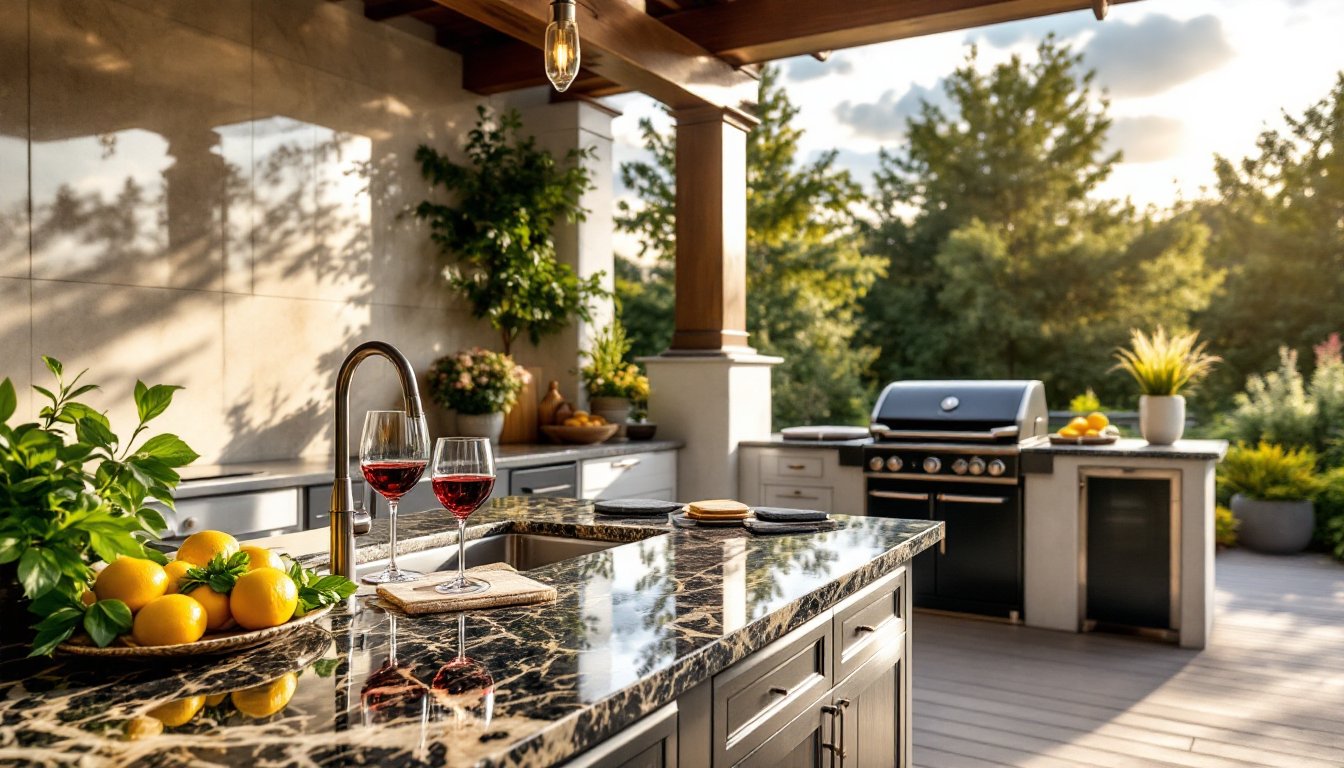
Granite is the heavyweight champion of outdoor countertops. It’s hard, beautiful, and can last decades with proper care. Granite slabs resist heat, scratches, and UV fading better than most materials, making it ideal for high-traffic outdoor kitchens that see real use.
The downside? Cost and maintenance. Granite typically runs $60–$150 per linear foot installed, depending on slab quality and your region. It’s also porous, even sealed granite needs resealing every 1–3 years to prevent staining and water absorption, which matters in wet climates. If you spill red wine or acidic foods, you’ve got a small window to wipe before it etches or stains.
Other natural stones like slate, soapstone, and bluestone offer alternatives. Slate is slightly softer than granite but offers darker, more textured aesthetics. Soapstone is naturally nonporous and doesn’t require sealing, but it scratches more easily and develops a silvery patina over time (some homeowners love this: others don’t). Bluestone is durable and slip-resistant, making it a smart choice for areas with moisture.
Installation matters: granite and stone need a solid, level substrate and professional installation. Improper support leads to cracking. If your outdoor structure wasn’t designed for stone from the start, reinforcement costs can add 20–30% to your budget.
Concrete Countertops for Modern Outdoor Kitchens
Concrete has become a favorite for modern outdoor kitchens because it’s affordable, customizable, and surprisingly durable when done right. You can tint it any color, embed decorative stones or glass, and shape it to fit your exact layout. Poured-in-place concrete runs $40–$80 per linear foot, making it budget-friendly compared to stone.
The catch: concrete cracks. It’s a porous material that expands and contracts with temperature and moisture. In freeze-thaw climates, this is especially problematic. To minimize cracking, use air-entrained concrete (designed with tiny air pockets for freeze-thaw resistance), proper reinforcement mesh, and control joints every 4–6 feet. Even then, some hairline cracking is almost inevitable, it’s not a defect: it’s concrete aging.
Sealing is mandatory. Unsealed concrete stains instantly and absorbs water. Apply a penetrating sealer every 1–2 years. Concrete also requires regular cleaning to prevent algae and mildew growth, especially in humid climates.
Design flexibility is concrete’s real strength. Unlike stone, you’re not limited to slab dimensions. Many homeowners use outdoor kitchen ideas that feature custom concrete shapes, integrated drainboards, or sloped surfaces for better water runoff. If you want something unique and don’t mind the maintenance, concrete delivers.
Stainless Steel: The Professional Choice
Stainless steel looks like a restaurant kitchen and performs like one. It’s nonporous, resists staining and bacteria growth, and handles heat without flinching. Many outdoor kitchens with built-in grills and cooktops pair stainless steel countertops alongside them for visual continuity.
304-grade stainless steel is the standard for outdoor use (higher nickel and chromium content means better corrosion resistance). 316-grade is superior but pricier, especially near coastal areas where salt spray accelerates rust. Expect to pay $80–$150 per linear foot installed.
Stainless steel requires specific care. It fingerprints easily, especially in high-traffic areas. It can scratch if you slide rough pots across it, and acidic foods or chlorine-based cleaners can pit the surface if left sitting. For outdoor use, a brushed finish hides scratches better than polished.
Edging and seams matter. Poor welding or gaps invite debris and water underneath, leading to corrosion from below. Insist on polished seams and professional installation. Some homeowners love the industrial aesthetic and worry-free maintenance: others find it too commercial-feeling for a backyard space. This is a personal call.
Tile and Porcelain Options
Tile is affordable, colorful, and forgiving, and it’s back in a big way for outdoor kitchens. Modern porcelain tiles simulate natural stone, wood, or concrete without the downsides of the real thing. Tile runs $20–$60 per linear foot installed, making it budget-friendly.
The key is choosing the right tile type. Unglazed porcelain (not ceramic, it’s softer) resists water absorption and doesn’t require sealing. It handles freeze-thaw cycles better than glazed tiles and provides better slip resistance when wet. Look for PEI rating 4 or higher (Porcelain Enamel Institute rating indicates durability for heavy-traffic surfaces).
Porcelain Tile Benefits
Porcelain’s nonporous nature makes it low-maintenance compared to natural stone or concrete. It resists staining, doesn’t need resealing, and cleans with just soap and water. Large-format tiles (24″×24″ or bigger) mean fewer grout lines where debris and mildew hide.
Grout is the weak point. Standard cement-based grout absorbs water and stains. Use epoxy grout for outdoor installations, it’s more expensive but waterproof and stain-resistant, critical in outdoor settings. Grout lines also create slip hazards when wet, so textured tile or add slip-resistant strips in high-traffic zones.
Installation requires a solid, level substrate. Uneven concrete causes tile to crack. Thin-set mortar must bond fully to the base, so prep work is non-negotiable. Tile also has thermal properties: in direct sun, dark tile gets hot: light tile reflects heat. Factor this into your design if you’re working in high-heat areas.
Laminate and Composite Materials
Budget-conscious homeowners often consider laminate, but outdoor kitchens are the wrong place for it. Laminate is prone to water damage, delamination, and UV fading. Even exterior-grade laminate breaks down in direct sun within 3–5 years. Skip it for permanent outdoor surfaces.
Composite materials, engineered quartz, acrylic solids, or recycled plastic composites, are a different story and worth considering. Engineered quartz (like Caesarstone or Silestone) combines natural quartz with resin binders. It’s nonporous, doesn’t need sealing, and resists scratches and staining better than natural stone. Outdoor versions hold up reasonably well, though they’re still vulnerable to extreme UV exposure over 10+ years and can yellow or fade in intense climates.
Recycled plastic composite countertops are emerging as eco-friendly options. They’re waterproof, durable, and require minimal maintenance. They’re softer than quartz, so they scratch more easily, but they’re repairable and affordable ($30–$50 per linear foot).
For outdoor kitchens specifically, these materials work best in covered patios or shaded zones where UV isn’t relentless. Full-sun exposure degrades composites faster than stone or concrete.
Choosing the Right Material for Your Needs
Start by asking three questions: What’s your climate? Freeze-thaw regions need materials that handle expansion and contraction, stone, porcelain, or properly sealed concrete work. Hot, dry climates are forgiving: humid or coastal zones demand nonporous materials and corrosion-resistant metals.
How much sun does your countertop get? Full-sun exposure favors stone, porcelain, and sealed concrete over composites or wood-look materials that fade. Covered patios expand your options.
What’s your maintenance tolerance? If you want fire-and-forget surfaces, porcelain and stainless steel win. If you’re willing to seal and clean regularly, granite, concrete, and composite materials open up more aesthetic choices.
Budget breakdowns (rough installed costs per linear foot): Porcelain tile ($20–$60), composite or recycled plastic ($30–$50), concrete ($40–$80), stainless steel ($80–$150), granite or quality stone ($60–$150+).
Resources like The Kitchn and specialized outdoor design galleries offer inspiration, and curated countertop guides help narrow material choices by showing real installations and product specs.
Don’t overlook installation. A botched installation kills even premium materials. Hire contractors experienced with outdoor kitchens, they know substrate preparation, drainage, and climate-specific practices that matter. Get multiple quotes and ask for references on outdoor projects in your region.