A deck without stairs is just a platform, but a deck with poorly designed or unsafe stairs is a liability waiting to happen. Deck stair railings aren’t just ornamental: they’re a crucial safety feature that protects everyone who uses your outdoor space. Whether you’re adding stairs to an existing deck or building from scratch, understanding the rules, materials, and installation methods will help you create stairs that are both functional and visually appealing. This guide walks you through everything homeowners need to know about deck stair railings in 2026, from code requirements to design choices and maintenance tips.
Table of Contents
ToggleKey Takeaways
- Deck stair railings are essential safety features required by law in most jurisdictions when stairs exceed 30 inches in height, preventing falls and protecting your family and visitors.
- Building codes require railings to be at least 36 inches tall measured from the stair nosing, with baluster spacing not exceeding 4 inches apart to prevent head entrapment.
- Popular deck stair railing materials include pressure-treated wood (affordable and traditional), composite materials (low-maintenance), metal railings (durable and sleek), and tempered glass (premium aesthetics).
- Proper installation requires plumb posts secured with lag bolts every 12–16 inches, accurate baluster spacing calculations, and all fasteners rated for exterior use to ensure code compliance and safety.
- Regular maintenance prevents costly repairs: wood railings need inspection and sealing every 2–3 years, while composite and metal railings require minimal care beyond annual rinsing and fastener checks.
- Consult your local building department before starting work, as deck stair railings require permits in most areas and failing to meet code can result in failed inspections, fines, and liability exposure.
Why Deck Stair Railings Matter
Deck stair railings prevent falls, which accounts for thousands of home injuries annually. They’re not optional safety equipment, they’re a legal requirement in most jurisdictions when stairs exceed 30 inches in height. Beyond code compliance, a well-designed railing protects children, elderly visitors, and anyone who might lose their footing on wet or icy steps.
Railings also dramatically influence the visual impact of your deck. A sturdy, thoughtfully designed railing complements your home’s architecture and can actually increase property value by signaling that safety and maintenance are priorities. Conversely, a poorly executed railing looks unfinished and can undermine an otherwise attractive outdoor space.
The stakes are real: failure to install proper railings exposes you to liability if someone is injured on your deck. Insurance companies and inspectors take this seriously, and for good reason.
Understanding Building Codes and Safety Standards
Building codes vary by state and municipality, but the International Building Code (IBC) sets national standards that most jurisdictions follow. Deck stairs and railings are covered under these codes, and ignoring them can result in failed inspections, fines, or liability issues if someone is injured.
Most deck stair work, especially structural changes, requires a building permit. Contact your local building department before you start: they’ll provide specific code requirements for your area. Some jurisdictions allow homeowners to pull their own permits: others require a licensed contractor.
Height and Baluster Spacing Requirements
Railing height must be at least 36 inches measured from the stair nosing (the front edge of the step) to the top of the railing. This is measured vertically from the highest point of the stair tread. Some codes allow 34 inches, but 36 inches is the safest standard and most common.
Baluster spacing, the vertical spindles or balusters between posts, cannot exceed 4 inches apart. This rule exists to prevent a child’s head or body from becoming trapped. Test this by attempting to pass a 4-inch sphere through any gap: if it fits, the spacing is too wide. Metal balusters, glass panels, and solid infill panels all satisfy this requirement if properly installed.
Top rail diameter and grip must accommodate a hand grip. Horizontal rails are typically 1.25 to 2 inches in diameter: vertical balusters are usually 1.25 to 2 inches wide. This ensures someone can grab and hold the railing if they slip.
Load ratings also matter. Rails must withstand a 200-pound horizontal force applied at the top rail without failing. This prevents someone from crashing through if they fall against the railing. Most properly installed wood or metal railings meet this standard, but installation quality is critical.
Popular Railing Materials for Deck Stairs
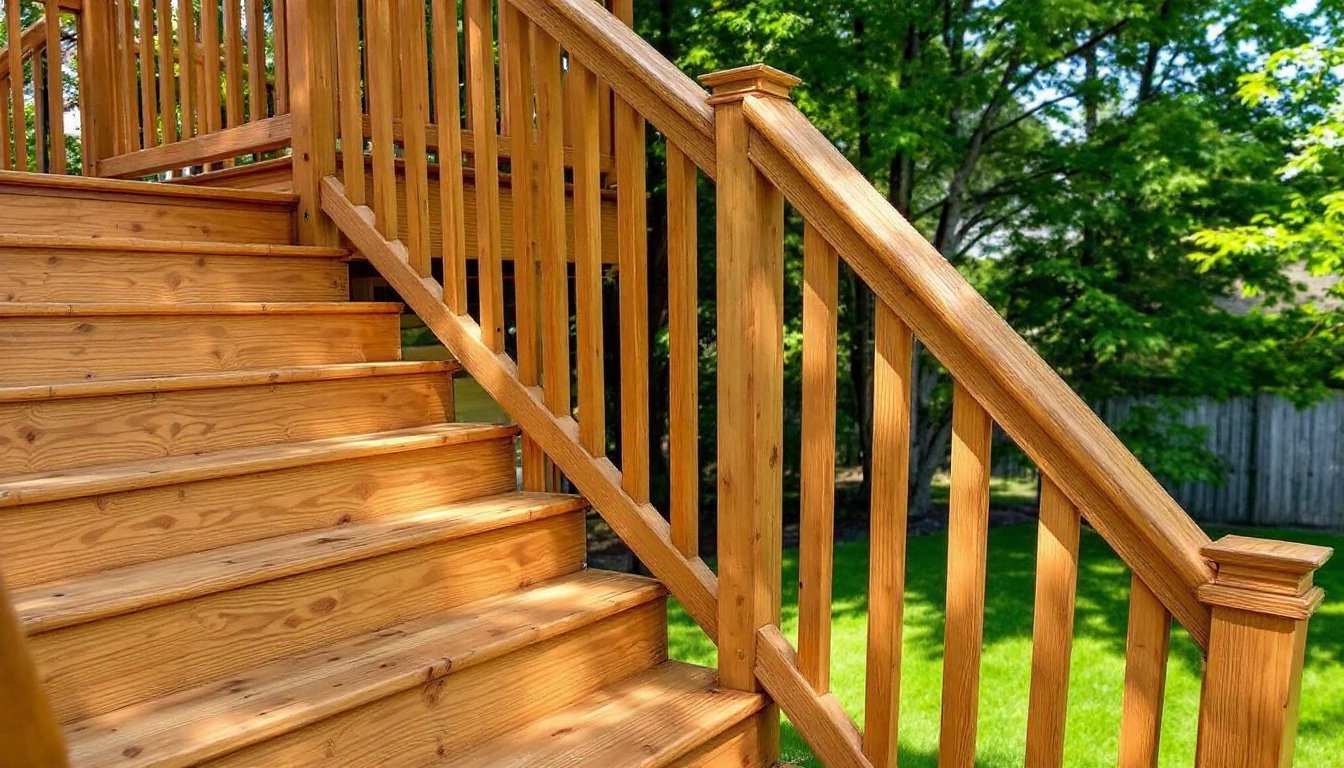
Pressure-treated wood remains the most popular choice for deck stairs and railings. It’s affordable, easy to work with, and blends naturally with most deck designs. Nominal 2×4 posts and 2×6 or 2×8 top rails are standard. Wood requires regular maintenance, staining or sealing every 2–3 years, but many homeowners appreciate the warmth and traditional look.
Composite materials (wood-plastic blends) offer lower maintenance than solid wood. They don’t rot, splinter, or require annual staining, making them ideal if you’re looking to minimize upkeep. Composites cost more upfront but pay dividends over 15–20 years. They can fade slightly in intense sunlight but hold up well overall.
Metal railings, typically aluminum or powder-coated steel, are durable and sleek. Aluminum is lightweight and rust-resistant: steel offers a more industrial look and superior strength but requires rust-preventive coatings. Metal railings often use vertical balusters, horizontal cables, or pickets to meet code spacing requirements.
Glass panels create an unobstructed view and work beautifully on elevated decks overlooking scenic areas. Tempered glass is safety-rated and won’t shatter like standard glass. It’s expensive and requires professional installation, but the sight line payoff is worth it for premium deck designs. Occasional cleaning keeps it looking pristine.
Each material has trade-offs between cost, maintenance, durability, and aesthetics. Choose based on your climate, budget, and how much upkeep you’re willing to handle.
Choosing the Right Design for Your Home
Your railing design should complement your home’s architecture. A modern minimalist home pairs well with aluminum rails and cable infill, while a traditional colonial benefits from classic wood balusters or pickets. A farmhouse aesthetic works with horizontal wood slats or rustic metal frames.
Consider sight lines and openness. Open designs (like balusters or cables) keep views of your yard accessible: solid infill panels provide privacy and wind resistance but block the view. If your deck overlooks a garden or landscape feature, open balusters or glass panels let you showcase the scenery.
Color and finish matter too. Dark stains make wood railings look sophisticated: lighter stains brighten the appearance. Metal can be powder-coated in virtually any color. Whatever you choose, ensure it contrasts with your deck surface so the railing is visible and safe, a dark railing on a dark deck is a tripping hazard.
Don’t underestimate the role of posts. 4×4 or 6×6 pressure-treated posts are structural anchors and visual focal points. Space them typically 4–6 feet apart on stairs, depending on code and span requirements. Proper post spacing and installation prevent wobbling and ensure code compliance.
Installation Basics for DIY Homeowners
Prep work is everything. Start by measuring your stair run and rise accurately. Mark post locations on the stair stringers (the angled supports running underneath the treads) using a tape measure and speed square. Posts must be plumb (perfectly vertical) and securely fastened to the stringers with lag bolts or deck screws.
Post installation: Drill pilot holes to prevent splitting. Use 1/2-inch lag bolts (minimum) or galvanized deck screws rated for exterior use. Space fasteners every 12–16 inches vertically. Stagger them if drilling through both sides. Check plumb after every fastening step using a 2-foot level.
Top and bottom rails: Install the top rail (typically a 2×6 or 2×8) securely to the posts using lag bolts or bolts with washers and nuts. The bottom rail, if you’re using vertical balusters, sits about 6–12 inches above the treads. Ensure the top rail is 36 inches above the stair nosing.
Baluster installation: Measure the spacing carefully. If you have a span of 48 inches and need 4-inch baluster spacing, calculate the number of balusters needed and adjust spacing proportionally so it stays under 4 inches. Use galvanized or corrosion-resistant fasteners (deck screws or nails) to avoid rust staining on wood. Composite balusters often slide into routed grooves on the rails for a clean look.
Safety during installation: Wear safety glasses to protect against flying debris, work gloves for splinters, and ear protection if using power tools like a miter saw for angle cuts. Use a sturdy ladder or scaffolding: deck stairs are elevated and mistakes can cause serious injury.
When to call a professional: If your stairs require a second landing (for stairs exceeding 12 feet of vertical rise), if you’re uncertain about your local codes, or if your deck is elevated more than 8 feet, consult a contractor or engineer. These scenarios involve complex load calculations and structural considerations beyond typical DIY scope.
For a comprehensive guide covering stair design and rail construction, measure twice and install once. Pre-cut composite balusters and kits simplify the process if you choose that route.
Maintenance and Long-Term Care
Wood railings need the most attention. Every 2–3 years, inspect for rot, splintering, or loose fasteners. Apply a water-repellent stain or sealant before winter to prevent moisture penetration. In rainy or coastal climates, you might increase this to annually. Replace any balusters showing rot at the base where they meet the rail, this is where water damage typically starts.
Composite and metal railings require minimal maintenance. Rinse with a garden hose annually to remove dirt and debris. For stubborn stains on composites, use mild soap and water with a soft brush. Metal railings benefit from periodic inspection of bolts and fasteners: tighten any that have loosened over time due to seasonal movement.
Glass panels need regular cleaning. Use a streak-free glass cleaner and a soft cloth. Inspect the seals and gaskets annually for cracks: water infiltration is the main threat to longevity.
Seasonal checks: Before winter, ensure all fasteners are tight and railings aren’t rotting or showing signs of damage. Snow and ice load can stress connections, especially on older installations. After winter, check for shifted posts or frost heave damage. In coastal areas, salt spray requires more frequent inspection for corrosion.
Regular maintenance prevents small problems from becoming code violations or safety hazards. A 15-minute inspection each year costs nothing but can save thousands in repairs or liability down the road.
Your deck stairs are one of the most-used features of your outdoor space. Investing in a properly designed, well-installed, and maintained railing pays dividends in safety, curb appeal, and peace of mind. Whether you build it yourself or hire a contractor, these guidelines ensure your stairs meet code, function reliably, and look great for years to come. For detailed step-by-step instructions and safety tips, consult reliable sources and your local building department before you break ground.