Rural housing options ideas offer homeowners a chance to build affordable, creative homes outside crowded urban centers. Whether someone dreams of a classic farmhouse or a modern off-grid retreat, rural land provides flexibility that city lots simply can’t match. The cost savings alone attract many buyers, land prices in rural areas often run 50-80% lower than suburban equivalents. Add in fewer zoning restrictions and more room to experiment, and the appeal becomes clear.
This guide covers six practical rural housing options ideas. From traditional cottages to converted barns, each approach offers distinct advantages for budget, lifestyle, and sustainability goals. Readers will discover which style fits their needs and learn what makes each option work in a country setting.
Table of Contents
ToggleKey Takeaways
- Rural housing options ideas like farmhouses, modular homes, and barn conversions offer affordable alternatives with land prices 50-80% lower than suburban areas.
- Modular and prefabricated homes cut construction costs by 10-20% while meeting the same building codes as traditional site-built houses.
- Off-grid housing solutions using solar panels, wells, and composting systems can reduce monthly utility expenses to under $50.
- Converted barns and agricultural buildings cost $100-200 per square foot and deliver unique character that new construction cannot replicate.
- Tiny homes and ADUs provide the most budget-friendly rural housing options ideas, with costs ranging from $15,000 for DIY builds to $80,000 for purpose-built models.
- Rural areas typically offer fewer zoning restrictions, making it easier to build creative housing styles and get faster permit approvals.
Traditional Farmhouse and Cottage Styles
Traditional farmhouse and cottage styles remain popular rural housing options ideas for good reason. These designs connect homeowners to agricultural heritage while providing practical living spaces built for country life.
Farmhouses typically feature wraparound porches, steep roof pitches, and open floor plans. The classic American farmhouse emerged from necessity, large kitchens for family cooking, mudrooms for dirty boots, and covered porches for shade during hot summers. Modern versions keep these functional elements while adding updated amenities.
Cottages offer a smaller footprint with equal charm. English-style cottages work well on wooded lots, while Cape Cod designs suit coastal rural areas. Both styles typically cost $150-250 per square foot to build, depending on finishes and location.
Key benefits of traditional styles:
- Proven designs that handle rural weather conditions
- Local contractor familiarity with construction methods
- Strong resale value in most rural markets
- Flexible layouts that accommodate additions over time
Builders often find traditional styles easier to permit because local planning boards recognize them. This familiarity speeds approval timelines and reduces bureaucratic headaches.
Modular and Prefabricated Homes
Modular and prefabricated homes represent some of the most cost-effective rural housing options ideas available today. Factory-built construction cuts costs by 10-20% compared to traditional site-built homes while maintaining quality standards.
Modular homes arrive in sections built at manufacturing facilities. Crews assemble these sections on-site, often completing the shell within days rather than months. Prefabricated homes take this concept further, some arrive nearly complete, requiring only utility connections and finishing touches.
The numbers favor this approach. A 1,500 square foot modular home typically costs $180,000-240,000 fully installed, including foundation work. Comparable site-built construction runs $225,000-300,000 in most rural markets.
Modular homes also handle delivery to remote locations better than many assume. Manufacturers design sections to fit standard truck widths, and experienced haulers know how to reach properties down gravel roads or through tight turns.
Quality concerns once plagued the prefab industry, but modern manufacturing has changed the picture. Today’s modular homes meet the same building codes as traditional construction. Many exceed minimum standards because factory conditions allow tighter quality control than outdoor job sites.
Popular modular options for rural settings include ranch-style layouts, two-story colonials, and contemporary designs with large windows.
Sustainable and Off-Grid Housing Solutions
Sustainable and off-grid housing solutions attract rural buyers who want independence from utility companies. These rural housing options ideas reduce monthly costs while minimizing environmental impact.
Off-grid homes rely on three core systems: power generation, water supply, and waste management. Solar panels paired with battery storage handle electricity needs for most households. A 10kW solar array with battery backup costs $25,000-40,000 installed and produces enough power for typical family use.
Water comes from wells or rainwater collection systems. Well drilling costs $5,000-15,000 in most regions, while rainwater systems run $2,000-8,000 depending on storage capacity. Both approaches eliminate monthly water bills entirely.
Composting toilets and septic systems manage waste without municipal connections. Modern composting toilets work surprisingly well, they’re odorless when properly maintained and legal in most rural jurisdictions.
Sustainable building methods complement these systems:
- Straw bale construction provides excellent insulation at low cost
- Earthship designs use recycled tires and passive solar heating
- SIPs (Structural Insulated Panels) reduce heating and cooling needs by 50%
- Cob and adobe work well in dry climates with accessible clay
These sustainable rural housing options ideas require more planning upfront but deliver decades of reduced operating costs. Many off-grid homeowners report monthly utility expenses under $50.
Converted Barns and Agricultural Buildings
Converted barns and agricultural buildings offer character that new construction can’t replicate. These rural housing options ideas transform existing structures into unique living spaces while preserving local architectural history.
Barn conversions work particularly well because these structures provide high ceilings, open floor plans, and solid construction bones. A typical barn conversion costs $100-200 per square foot, often less than new construction of similar quality.
The process involves several key steps:
- Structural assessment to identify needed repairs
- Foundation reinforcement if the original wasn’t designed for residential use
- Insulation installation in walls and roof
- Window and door placement for natural light and ventilation
- Utility rough-in for plumbing, electrical, and HVAC
Other agricultural buildings suit conversion too. Grain silos become quirky studio apartments. Equipment sheds transform into workshops with living quarters above. Even chicken coops convert into charming guest cottages on larger properties.
Zoning matters here. Some jurisdictions classify agricultural buildings differently than residential structures. Buyers should verify that local codes permit residential conversion before purchasing a property with conversion plans in mind.
The aesthetic payoff makes the effort worthwhile. Exposed timber framing, original hardware, and weathered wood siding create spaces with soul that mass-produced homes lack.
Tiny Homes and Accessory Dwelling Units
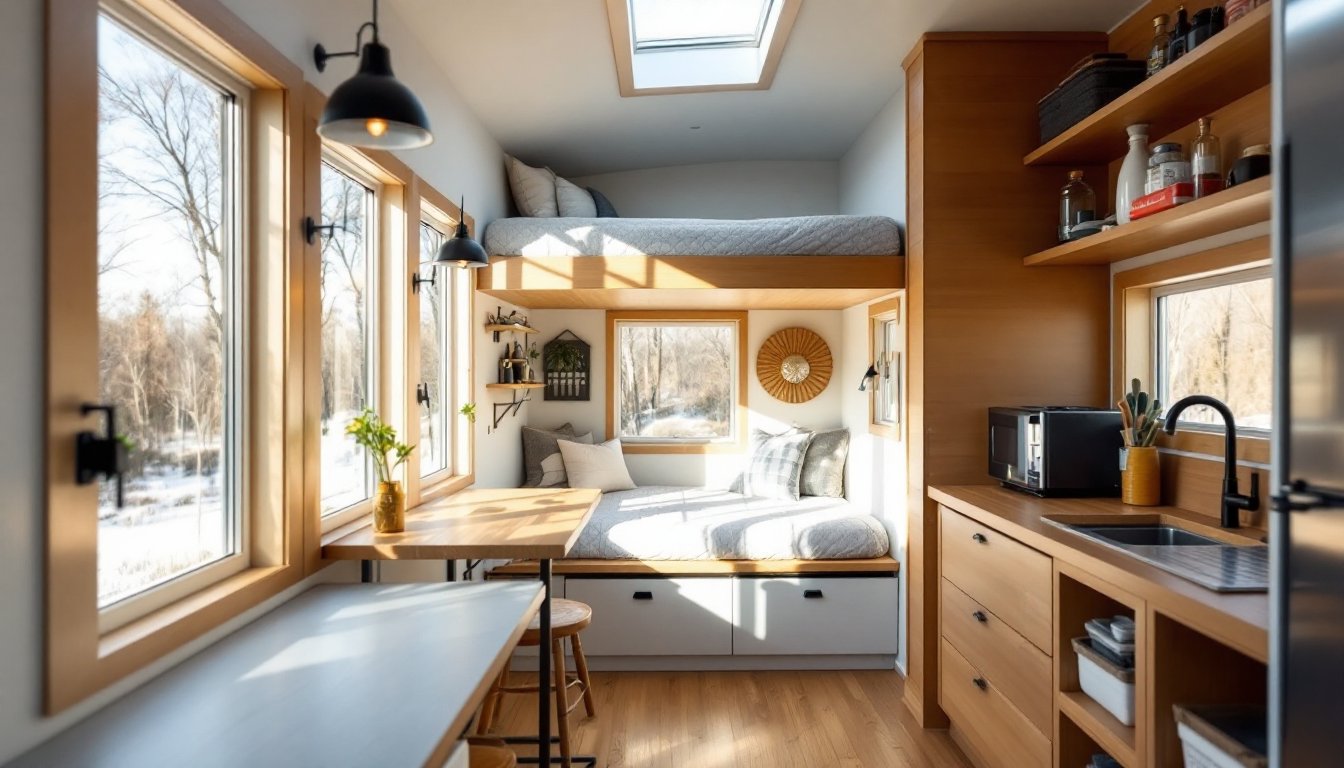
Tiny homes and accessory dwelling units (ADUs) represent the most affordable rural housing options ideas for budget-conscious buyers. These compact structures deliver complete living spaces at a fraction of traditional housing costs.
Tiny homes typically measure 100-400 square feet. Purpose-built models cost $30,000-80,000, while DIY builders complete projects for $15,000-40,000. The lower price point makes homeownership accessible to people priced out of conventional markets.
ADUs serve different purposes in rural settings. Property owners add them as:
- Guest quarters for visiting family
- Rental units generating passive income
- Home offices separated from main living spaces
- Caretaker housing on larger agricultural properties
Rural areas often have friendlier regulations for tiny homes than urban zones. Many counties allow tiny homes on permanent foundations without the size minimums that restrict city construction. Wheels-based tiny homes face more regulatory questions, so buyers should research local rules before committing.
The rural lifestyle suits tiny living particularly well. Outdoor space substitutes for indoor square footage. A 200 square foot home feels less cramped when residents have acres of land for activities. Gardens, workshops, and outdoor living areas extend the functional space beyond the structure’s walls.
Financing remains the main challenge. Traditional mortgages rarely cover tiny homes, so buyers typically pay cash or use personal loans with higher interest rates. RV loans work for certified mobile tiny homes but require the structure to meet specific standards.