A flat roof on a commercial building serves a clear purpose, protection from the elements, but it also creates a specific maintenance challenge. Unlike pitched roofs that shed water naturally, flat roofs trap moisture and demand proactive attention. Whether you’re managing a strip mall, warehouse, office building, or mixed-use structure, understanding your repair options can save tens of thousands of dollars and prevent catastrophic water damage inside your facility. This guide walks through the most common flat roof repair solutions, from quick patches to full replacements, so you can make an well-informed choice about what your building actually needs.
Table of Contents
ToggleKey Takeaways
- Commercial flat roof repair options range from quick patching ($300–$800 per patch) for isolated damage to full membrane replacement ($100,000–$200,000) for systemic failure, with proper assessment preventing costly mistakes.
- Flat roofs require annual inspections for ponding, blistering, and seam separation, since standing water accelerates deterioration and can cause water damage inside your facility weeks after rainfall.
- Membrane patching works best on young roofs (less than 10 years old) with isolated punctures or tears, but multiple patches signal declining membrane health and warrant investigating replacement options.
- Coating systems provide a cost-effective middle path ($1–$5 per square foot) for 10–15-year-old roofs with minor damage, extending life by 5–10 years and buying time before full replacement.
- Choose replacement when your roof exceeds 15 years, has multiple leak points, or you’ve patched the same area twice; TPO, EPDM, and PVC membranes offer different advantages in cost, durability, and chemical resistance.
- Schedule flat roof repair work in spring or fall when contractors have predictable weather, and allow 3–6 weeks for permits plus 1–4 weeks for actual installation to minimize operational disruption.
Understanding Flat Roof Damage and When Repairs Are Needed
Flat roofs fail in predictable ways. The most common culprits are standing water (ponding), membrane punctures or tears, seam separation, and UV degradation over time. Standing water is especially dangerous because it accelerates deterioration and adds weight to the structure, modern building codes require adequate drainage with a minimum slope of 1/4 inch per 12 inches of run, though many older buildings don’t meet this standard.
Leaks often show up as water stains on ceiling tiles or wet insulation in the attic space, sometimes days or weeks after the rain event. This lag time means small problems become big ones fast if ignored. Inspect your roof annually, ideally in spring after winter weather and in fall before heavy rain season. Look for blistering (membrane bubbling), cracks (especially at seams), exposed fasteners rusting through, and pooling water that sits more than 48 hours after rain.
Know the age of your membrane. Single-ply systems (TPO, EPDM, PVC) typically last 15–20 years: built-up roofs (tar and gravel) last 15–25 years: and modified bitumen holds up 10–20 years. If your roof is near the end of its lifespan and you’re seeing multiple trouble spots, replacement is usually more cost-effective than continued patching. One-off leaks during the first half of a roof’s life are worth repairing: systemic failure near end-of-life demands replacement.
Membrane Patching: The Quick Fix for Minor Leaks
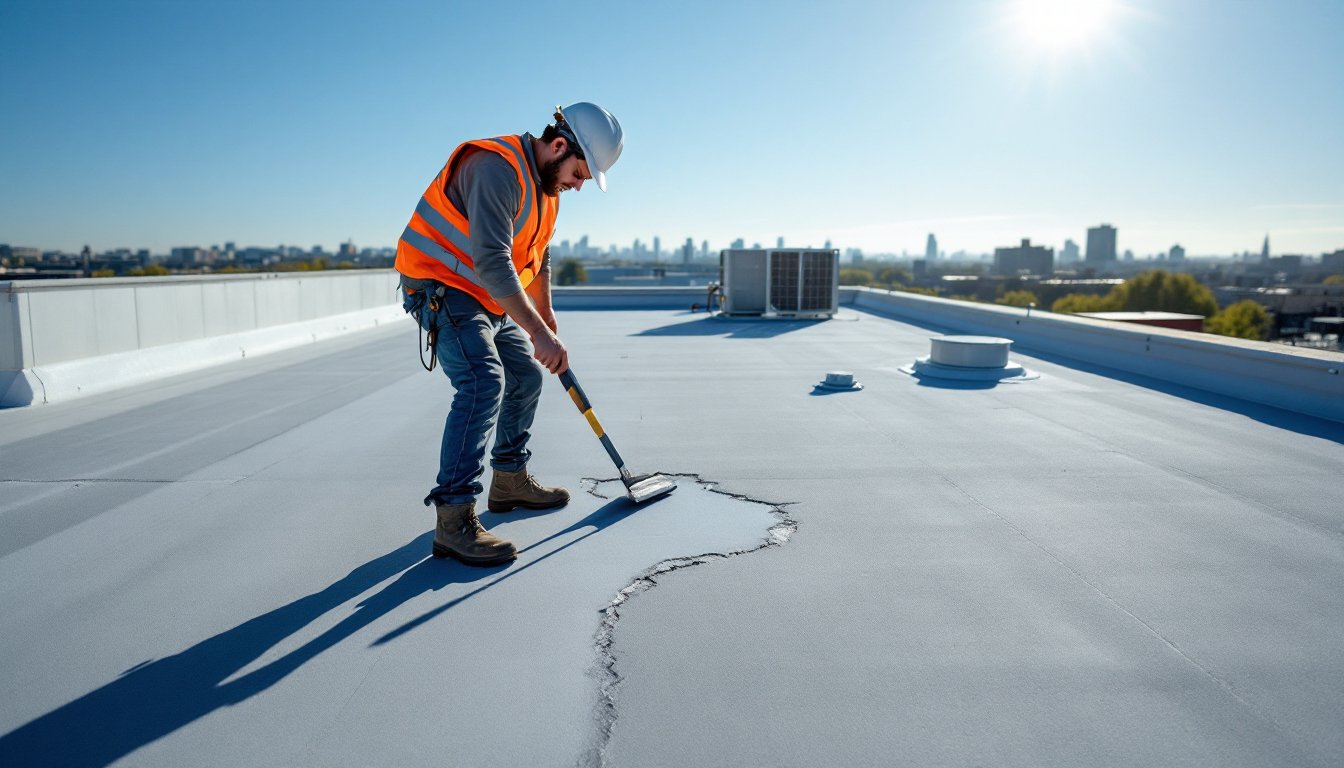
Patching works when damage is isolated, a single puncture, a small tear, or a localized seam separation on an otherwise sound membrane. This is your lowest-cost, fastest repair and can extend the time before full replacement by several years if the underlying roof is structurally intact.
Common patching materials include self-adhering bitumen patches (waterproof tape-like material), TPO or EPDM adhesive patches matched to your existing membrane type, and liquid-applied sealants for hairline cracks. For most single-ply systems, a 12-inch square patch (or circular equivalent) covers a small puncture: larger tears need proportionally larger overlaps, usually a minimum of 6 inches on all sides beyond the damaged area.
The critical step that most DIYers skip: surface prep. Clean the area thoroughly, remove dirt, algae, and any loose membrane with a wire brush. Let it dry completely (moisture under a patch prevents adhesion). For TPO and PVC membranes, a primer or bonding agent improves results: EPDM patches often use a rubber cement that requires specific curing time. Apply patches at temperatures above 50°F, cold weather reduces adhesive effectiveness and causes installation failure.
Patching is realistic for owners with a facilities team in-house or a trusted roofing contractor on retainer. Costs typically run $300 to $800 per patch, depending on membrane type and accessibility. Multiple patches across the roof in a single year signal declining membrane health: at that point, investigate replacement.
Full Membrane Replacement: When Repair Isn’t Enough
Replacement becomes the sensible choice when leaks recur, damage covers multiple areas, or the membrane has lost integrity due to age or UV exposure. This is a structural repair that requires licensed contractors and often municipal permits: it’s not a DIY undertaking.
Three main membrane types dominate the commercial market. TPO (Thermoplastic Polyolefin) is the fastest-growing choice, it’s energy-efficient, reflective (reduces cooling costs), and costs roughly $4–$8 per square foot installed. Seams are heat-welded, creating strong bonds, though installation quality depends heavily on crew experience. EPDM (Ethylene Propylene Diene Monomer) is a rubber product, less expensive at $3–$6 per square foot, durable, and forgiving to install, but black color absorbs heat (higher cooling bills) unless you add a reflective coating. PVC (Polyvinyl Chloride) is mid-range in cost ($5–$10 per square foot) and excellent for chemical resistance, making it preferred near restaurants, laundries, or light manufacturing where grease or solvents are present.
Before ordering a new membrane, contractors must assess the deck underneath, concrete, steel, or wood. Insulation may be new or reused (if still sound). Proper ventilation prevents moisture accumulation in the insulation layer. Full replacement typically includes removal of the old membrane, inspection and repair of the deck if needed, new insulation if compromised, and installation of the new membrane with proper flashing at penetrations (vents, pipes, HVAC units).
Budget $10–$20 per square foot for a complete replacement on a 10,000-square-foot building. That’s roughly $100,000–$200,000 before permitting, which can add 2–4 weeks and a few hundred to a few thousand dollars depending on your jurisdiction. Life expectancy: 20–25 years for TPO or PVC: 20–30 years for EPDM. This is the most comprehensive fix but requires contractor oversight and planning.
Coating Systems: Extending Roof Life Without Full Replacement
A roof coating is a middle path between patching and replacement. It’s a liquid-applied waterproof layer (usually acrylic, polyurethane, or silicone) sprayed or rolled onto the existing membrane. Coatings seal minor cracks, reflect UV rays (extending membrane life), reduce interior temperature swings, and cost less than replacement.
Coatings work best on roofs in good structural condition, no major tears, no systemic ponding, and membrane still bonded to the deck. If the roof is already failing, a coating masks symptoms but doesn’t fix the underlying problem: water will eventually find its way through gaps or delaminated seams underneath. Think of it as a refresher for a 10-to-15-year-old roof with minor cosmetic damage.
Acrylic coatings cost $1–$2 per square foot and offer good UV protection and reflectivity, but they’re water-based and less durable in wet climates. Polyurethane coatings run $2–$4 per square foot, provide excellent protection, and resist standing water better, ideal for roofs with ponding issues. Silicone coatings are pricier at $3–$5 per square foot but excel in severe weather and wet environments: they’re also the most forgiving if prep work is imperfect.
Surface prep is critical: pressure wash at 1500–3000 psi to remove algae and debris, allow 48 hours drying time (48–72 hours in humid climates), and repair any blisters or loose seams before coating. Application temperature matters, most coatings require 50–85°F and low humidity. Plan for recoating every 5–10 years depending on climate and UV exposure. A coating adds 2–5 years to a roof’s life, buying time for capital planning. It’s cost-effective if you need a 3–5 year runway before a full replacement is feasible.
Choosing the Right Repair Option for Your Budget and Timeline
Picking the right repair hinges on five factors: age of the roof, extent of damage, budget, timeline, and your risk tolerance for future leaks.
If your roof is less than 10 years old and you have isolated leaks (one or two spots), patching is the smart move. It’s fast (1–2 days), affordable, and keeps your capital budget intact. Contact a roofer with experience in your membrane type and get a moisture inspection under the damaged area to rule out saturation in the insulation layer.
If your roof is 10–15 years old and showing moderate wear (occasional leaks, minor blistering, some edge deterioration), a coating system buys you time cheaply. Expect $2–5 per square foot installed and 5–10 years additional life. This works especially well if you’re planning a larger capital project in 3–5 years.
If your roof is 15+ years old, has multiple leak points, widespread membrane degradation, or you’ve patched the same area twice, replacement is the only long-term answer. Yes, it’s a six-figure project for most commercial buildings, but roof repair costs vary widely depending on membrane type and regional labor rates. Get three contractor bids from firms with references in your building type and climate zone. Factor in permits, phasing to keep your building operational, and any required deck repairs discovered during removal.
Cost estimators like HomeAdvisor and Angi let you input building size and local zip code to ballpark expenses and connect with vetted contractors. These platforms help you compare pricing and read reviews from similar projects.
Timing matters, too. Membrane replacement should happen in dry season and ideally when you can tolerate some operational disruption. Spring (March–May) or fall (September–October) give contractors predictable weather and avoid peak summer demand (higher prices) and winter rain that muddles the work. Budget 3–6 weeks for permitting and scheduling, plus 1–4 weeks for the actual work depending on roof size and complexity.
Conclusion
Flat roof repair is about matching the severity of the problem to the appropriate solution. Isolated leaks on a young membrane warrant a patch: moderate aging calls for a coating to extend life: systemic failure demands replacement. Honest assessment of your roof’s age, condition, and your timeline prevents costly mistakes and surprises. Work with experienced contractors who provide references, warranties, and detailed post-repair inspections. A well-maintained flat roof protects your entire facility and your bottom line for decades.